 EN
EN
How Scraper Systems Impact Sedimentation Efficiency and Hydraulic Performance
Why Unmanaged Sludge Accumulation Reduces Clarifier Hydraulic Capacity and Effluent Quality
When sludge builds up without proper management, it causes serious problems in sedimentation tanks because it takes up space that should be available for water flow and messes with the smooth movement of liquids. Research shows that once sludge gets too thick, around 30% of the tank's depth or more, things start going wrong pretty quickly. Hydraulic retention time plummets by about 40%, while the water leaving the tank becomes cloudier by roughly 35%. These figures show up again and again in environmental protection guidelines and scientific papers looking at how clarifiers work. What actually happens is that settled particles creep into areas where they shouldn't be, creating shortcuts through the system that skip over the normal settling process completely. Regular maintenance with properly adjusted scrapers keeps all this from happening by keeping sludge levels manageable. Most experts agree that maintaining sludge blankets below 20 to 25% of the overall tank depth works best for preserving good separation between clean water and waste materials.
Core Mechanical and Hydraulic Principles Governing Effective Scraper System Design
High performance scrapers rely on three main factors working together: First, the blade shape needs to fit the tank exactly so it touches the whole floor but doesn't create too much resistance during operation. Second, using materials that resist corrosion matters a lot, especially in acidic conditions. Stainless steel grade 316 or UHMW polyethylene coatings can cut down on material wear by around 83% when tested under ASTM G154 standards for accelerated corrosion. Third, controlling speed through variable frequency drives allows operators to match scraping speeds with what's coming into the tank from solids loading. For rectangular tanks, chain driven systems work best because they spread force evenly across the tank surface. Circular basins tend to perform better with either rotary or bridge mounted designs since these maintain better hydraulic balance. Something important to remember though is keeping blade speeds under the point where sludge gets stirred back up again. Most systems aim for velocities between 0.3 and 0.5 meters per second depending on the sludge properties. Municipal plants have found this range works well through computer simulations and actual field tests over time.
Comparing Primary Scraper System Types: Chain, Rotary, and Bridge-Mounted Solutions
Chain Scraper Systems: Strengths in Rectangular Tanks and High-Load Applications
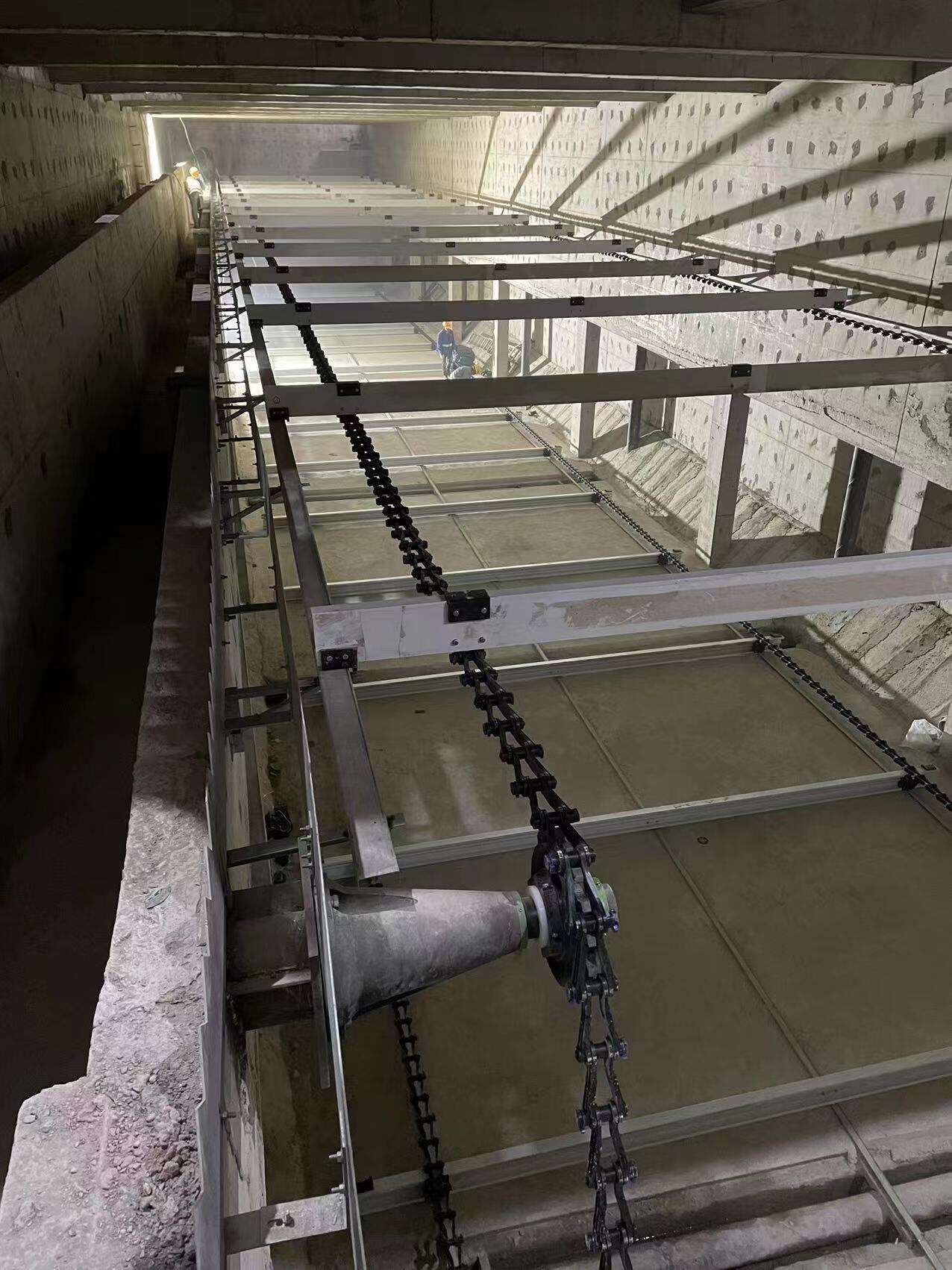
Chain scrapers work with those continuous linked flights to move settled sludge across rectangular basin floors right into the central collection troughs. The straight line design ensures even pressure gets applied all along the tank, so there aren't these pesky dead spots where solids just pile up and won't budge. That's why these systems really shine in places with heavy solids loads, such as municipal primary treatment facilities dealing with thick, gritty sludge that puts serious wear on equipment. Looking at actual field reports from more than 120 wastewater treatment plants shows something interesting: chain systems keep around 92% hydraulic efficiency even in tanks over 100 meters long. They achieve this mainly because they stop the sludge blanket from creeping into the settling area where it causes problems. Another big plus is having all the drive components above water level. Maintenance crews don't need to drain the tank before servicing, which cuts down on downtime during repairs by about two thirds compared to systems where everything is underwater.
Rotary and Bridge-Mounted Scraper Systems: Advantages for Circular Basins and Space-Constrained Sites
Rotary scrapers work by using radial arms attached to a central column that rotate slowly to move sludge toward the center hopper. This setup creates good hydraulic balance in circular clarifiers, which helps everything run smoother. The bridge mounted versions actually ride around the top of the tank on supports above water level. No need for those submerged chains anymore, so digging trenches isn't required either. These scraper systems take up much less space overall and aren't as complicated to install, which makes them great choices when upgrading old plants or working in tight spaces where there's not much room to spare. According to studies done by the Water Environment Federation, these systems can cost about 25% less to put in place compared to traditional chain driven models with similar capacity. When sludge gets collected centrally, pumps start easier and don't have to fight against suction losses. Plus, the bearings are simpler affairs often sealed tight with no grease needed. Maintenance crews report needing to service these parts only once every few months rather than monthly checks in harsh industrial environments where getting close to equipment can be dangerous or difficult.
Smart Scraper Systems: Automation, IoT Monitoring, and Energy Optimization
Real-Time Sludge Level Sensing and Adaptive Scraping Schedules
Today's scraper systems come equipped with various types of sensors including ultrasonic, gamma radiation, and capacitive ones that keep an eye on how sludge builds up at the bottom of tanks. The information gathered in real time gets processed by smart controls which decide when it's actually necessary to start scraping based on how thick the sludge has become. This means the system only activates when needed, stopping potential overflows but also cutting down on wasted cycles. Facilities that have made the switch tell us they're seeing around 19 percent less wear on their equipment parts and about 35 percent fewer times operators need to step in manually compared to old timer-based systems according to a recent industry study from 2023 looking at 47 different water treatment plants. What makes this approach so valuable is that it maintains proper water flow without needing constant adjustments from staff, keeping the clarity of treated water pretty much steady within just plus or minus 0.3 NTU throughout both daily changes and longer seasonal shifts in water volume.
VFD Integration and Edge-Based Control for 28–41% Energy Reduction
When Variable Frequency Drives (VFDs) work alongside edge-based controllers, they create much finer control over local power usage. Instead of letting motors run at constant speeds all day long, these smart systems tweak both torque and rotation speed as needed, looking at factors like how thick the sludge gets (which inline viscometers measure) and how high layers build up. What makes this setup really effective is edge processing that cuts out delays from sending data to the cloud, so responses happen within seconds when loads change. Real world tests show energy savings between 28 to 41 percent for scrapers, and this isn't accomplished by making them work worse either. The system simply matches exactly what power is needed when. On days when there's less material to handle, motors drop down below 30% of their maximum capacity. But when things get busy and materials pile up, the system ramps up smoothly without missing a beat. This approach keeps everything working properly while cutting costs and reducing environmental impact significantly.
Operational Reliability: Maintenance Strategies to Maximize Scraper System Uptime
Proactive, evidence-based maintenance—not just scheduled intervals—is essential to sustaining scraper performance. Facilities adopting integrated reliability protocols report 23% fewer unplanned stoppages than those relying on reactive repair (Industry Maintenance Report 2024). Three strategies deliver measurable uptime gains:
- Material selection: Tungsten carbide scraper blades last 24–36 months—triple the service life of standard polyurethane—reducing replacement frequency by 67% and associated labor costs.
- Predictive monitoring: Vibration sensors detect abnormal chain stress or bearing resonance 63% faster than visual inspections, enabling repairs before catastrophic failure.
- Structured scheduling: Quarterly performance audits—including torque profiling and alignment verification—combined with annual load testing, cut emergency repairs by 41%.
| Maintenance Factor | Impact on Operational Efficiency |
|---|---|
| Corrosion-resistant coatings | 75% longer component lifespan |
| Automated performance analytics | 30% reduction in chemical cleaning |
| Torque monitoring systems | 43% fewer mechanical failures |
Though high-durability components carry a 15–20% higher initial cost, lifecycle analysis shows they deliver 19% lower total ownership costs over five years. Facilities implementing all three strategies sustain >90% system uptime while maintaining ≈95% design sludge removal efficiency—even under fluctuating influent conditions.
FAQ
What is the significance of maintaining sludge levels below 25% of tank depth?
Maintaining sludge levels below 25% of the tank depth is crucial to preserving efficient separation between clean water and waste material. Excessive sludge buildup reduces hydraulic capacity and affects water clarity.
What materials are recommended for scraper blades in corrosive environments?
For corrosive environments, stainless steel grade 316 or UHMW polyethylene coatings are recommended as they significantly reduce wear and resist corrosion effectively.
How do smart scraper systems optimize energy usage?
Smart scraper systems utilize Variable Frequency Drives (VFDs) and edge-based control to adjust torque and speed based on sludge levels, ensuring optimal energy usage and reducing power consumption by up to 41%.
What are the benefits of using predictive monitoring for scraper systems?
Predictive monitoring, using vibration sensors, can detect potential issues faster and more accurately than traditional inspections, allowing for timely repairs and reducing the chance of catastrophic failure.
Table of Contents
- How Scraper Systems Impact Sedimentation Efficiency and Hydraulic Performance
- Comparing Primary Scraper System Types: Chain, Rotary, and Bridge-Mounted Solutions
- Smart Scraper Systems: Automation, IoT Monitoring, and Energy Optimization
- Operational Reliability: Maintenance Strategies to Maximize Scraper System Uptime
- FAQ