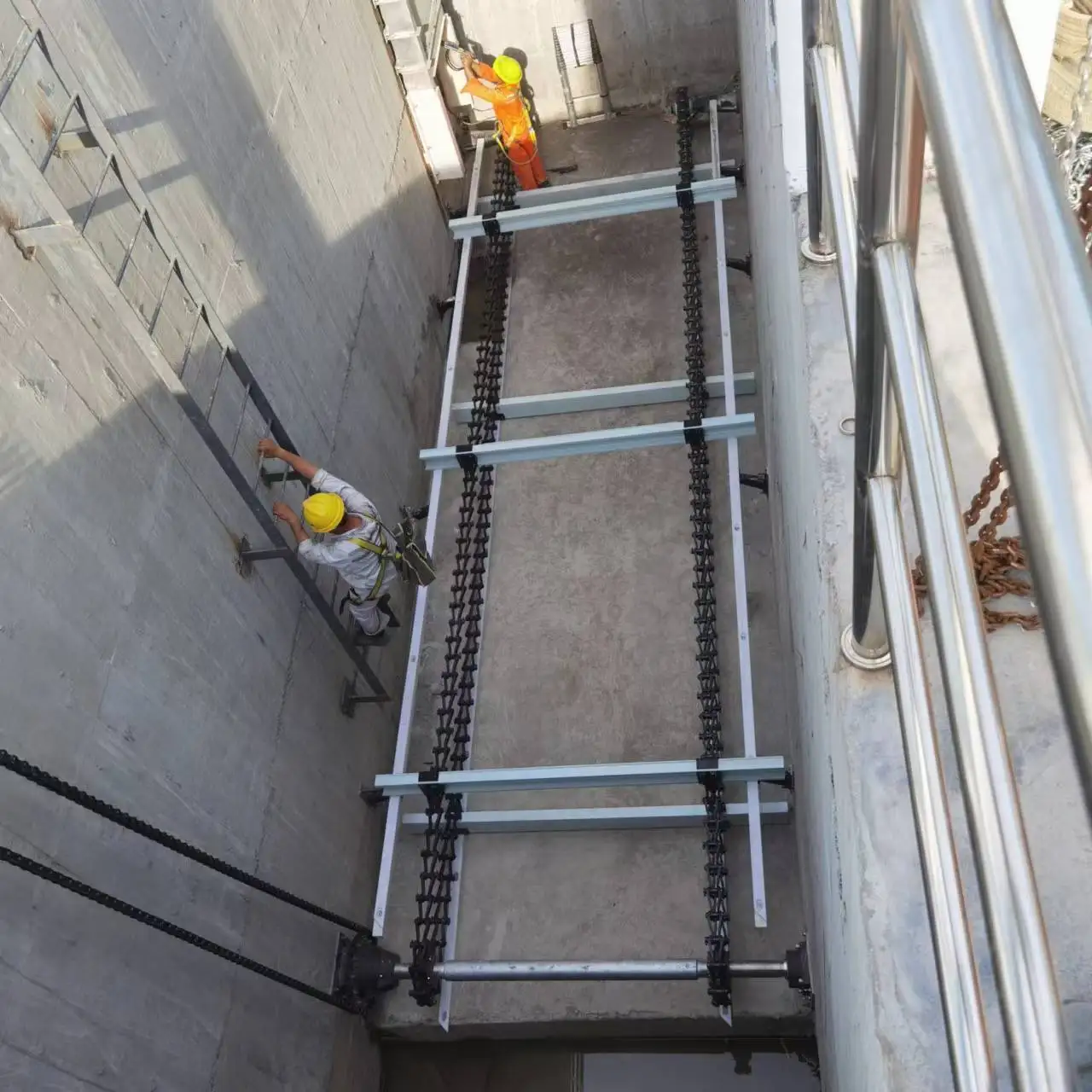
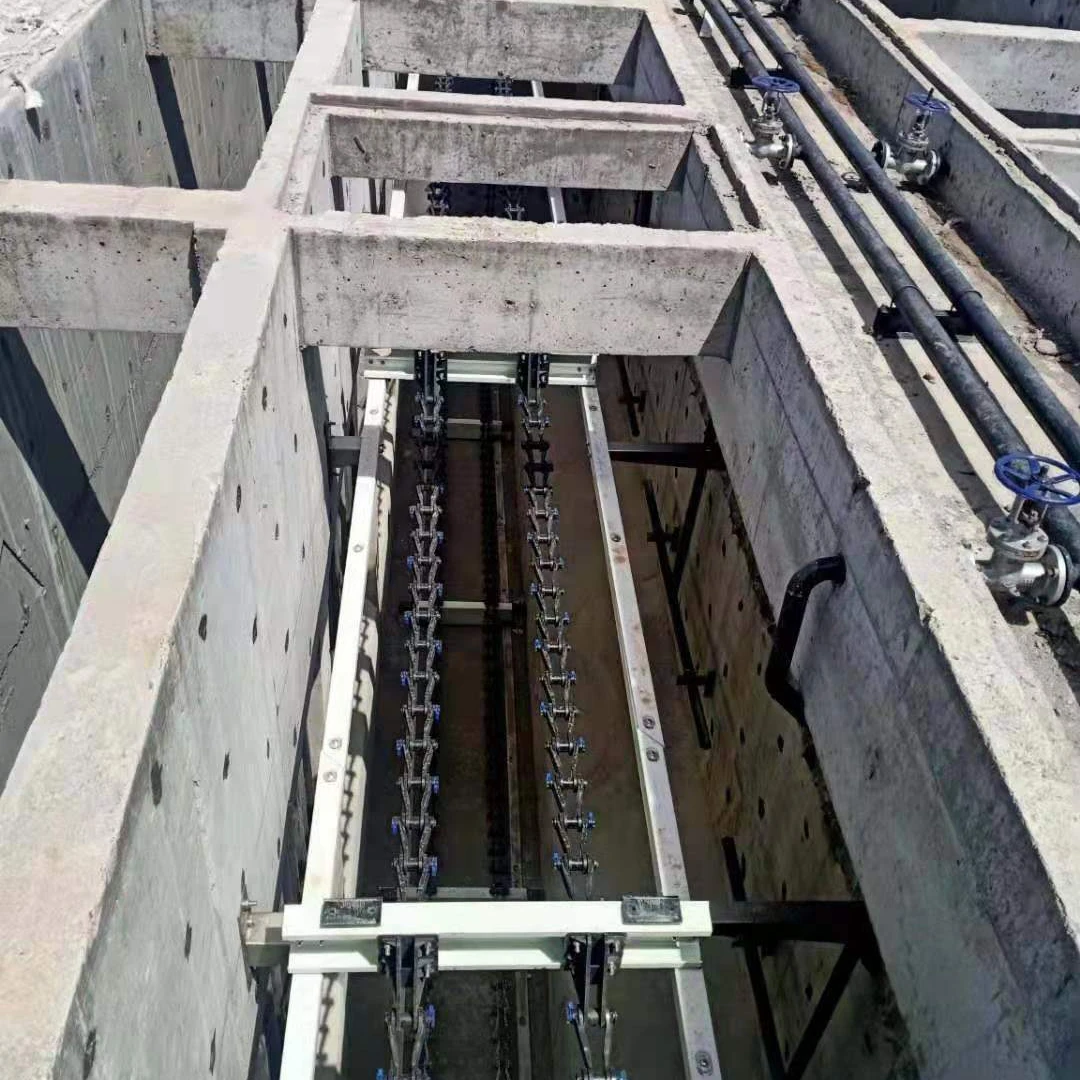
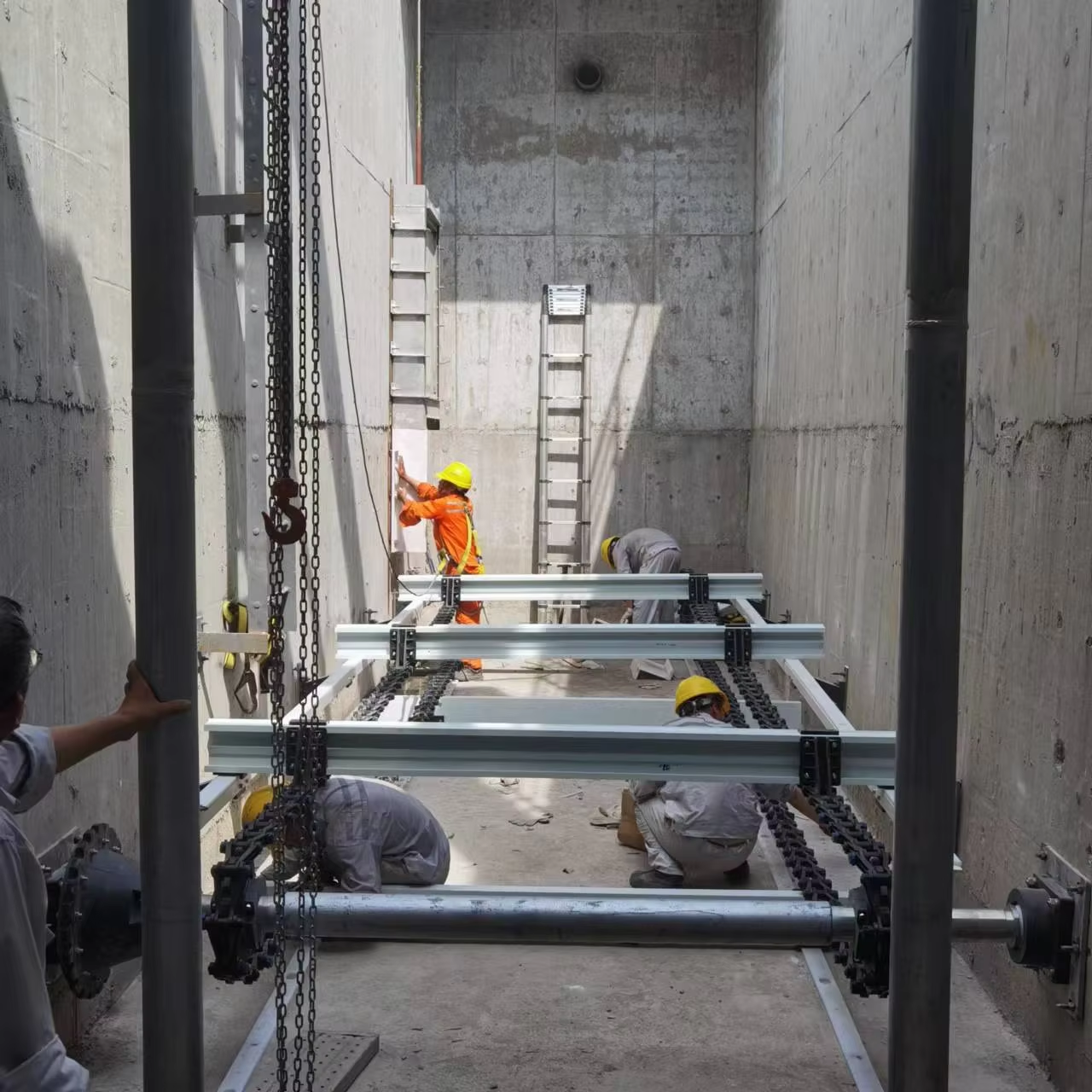
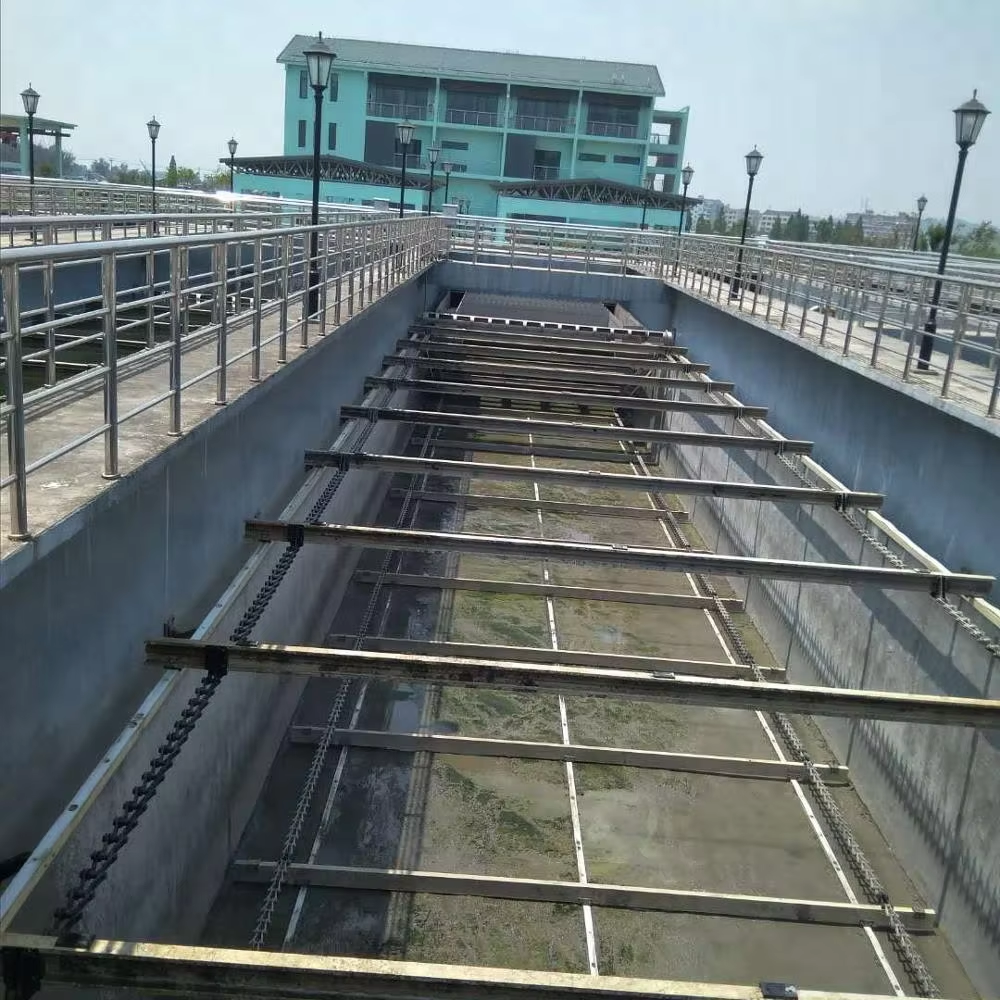
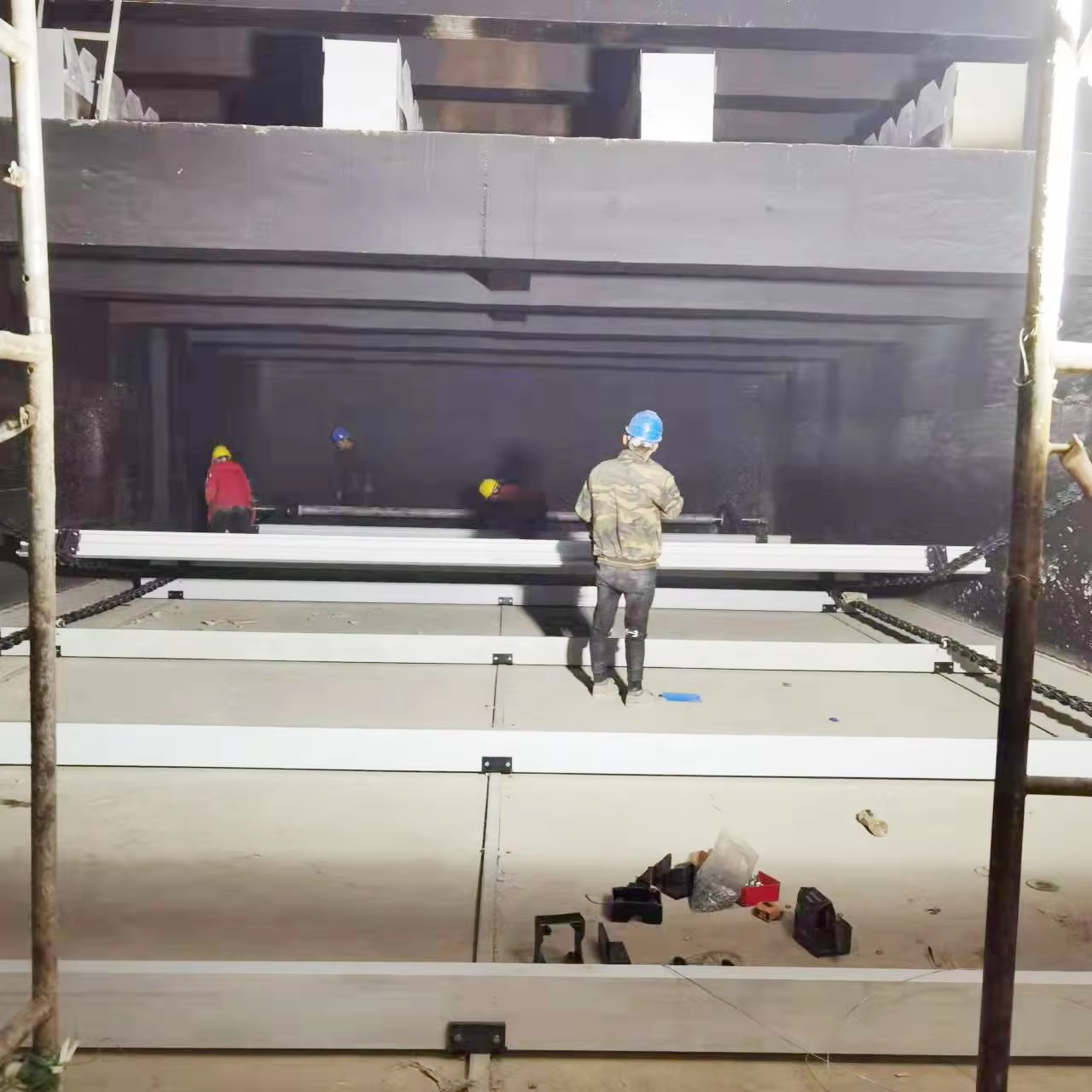
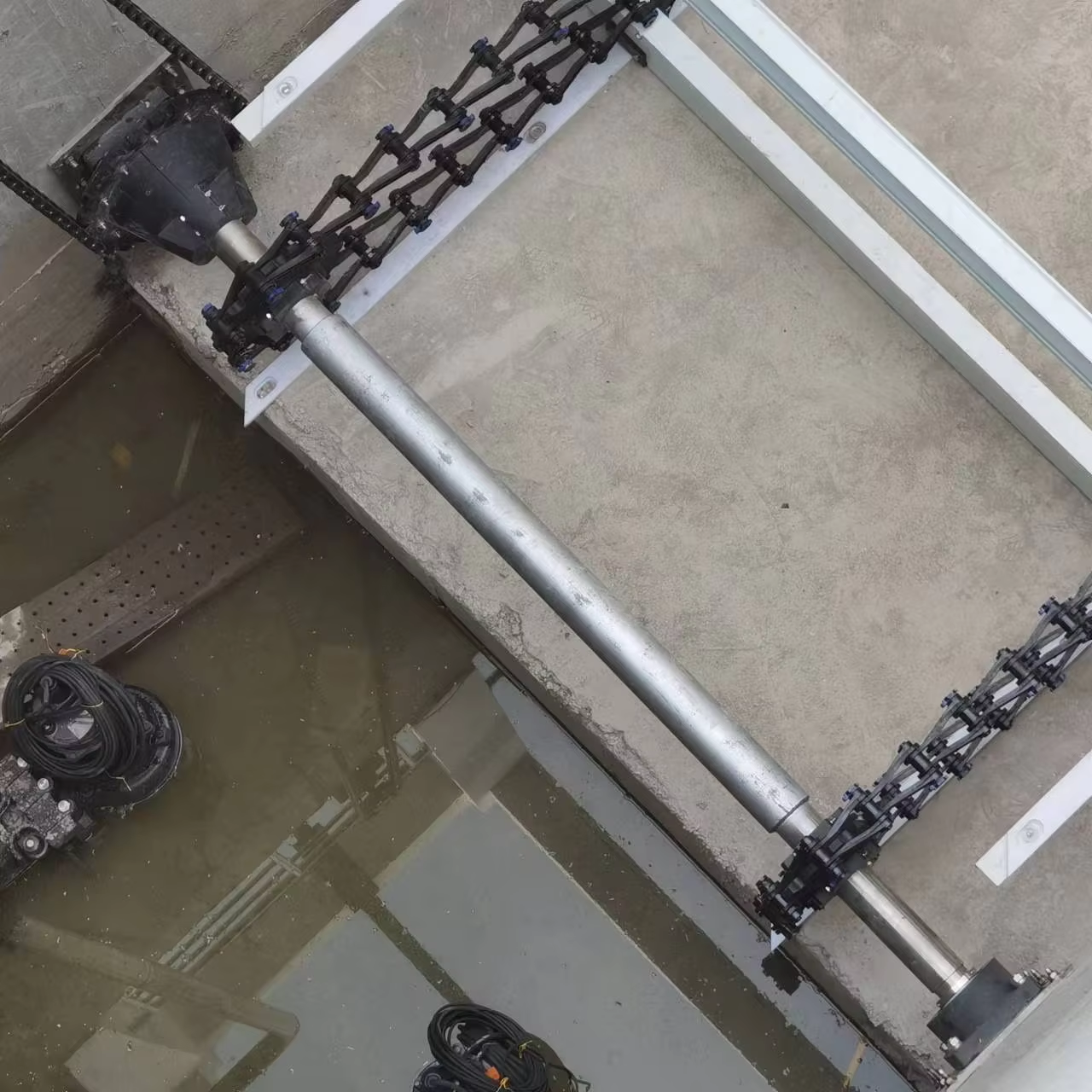
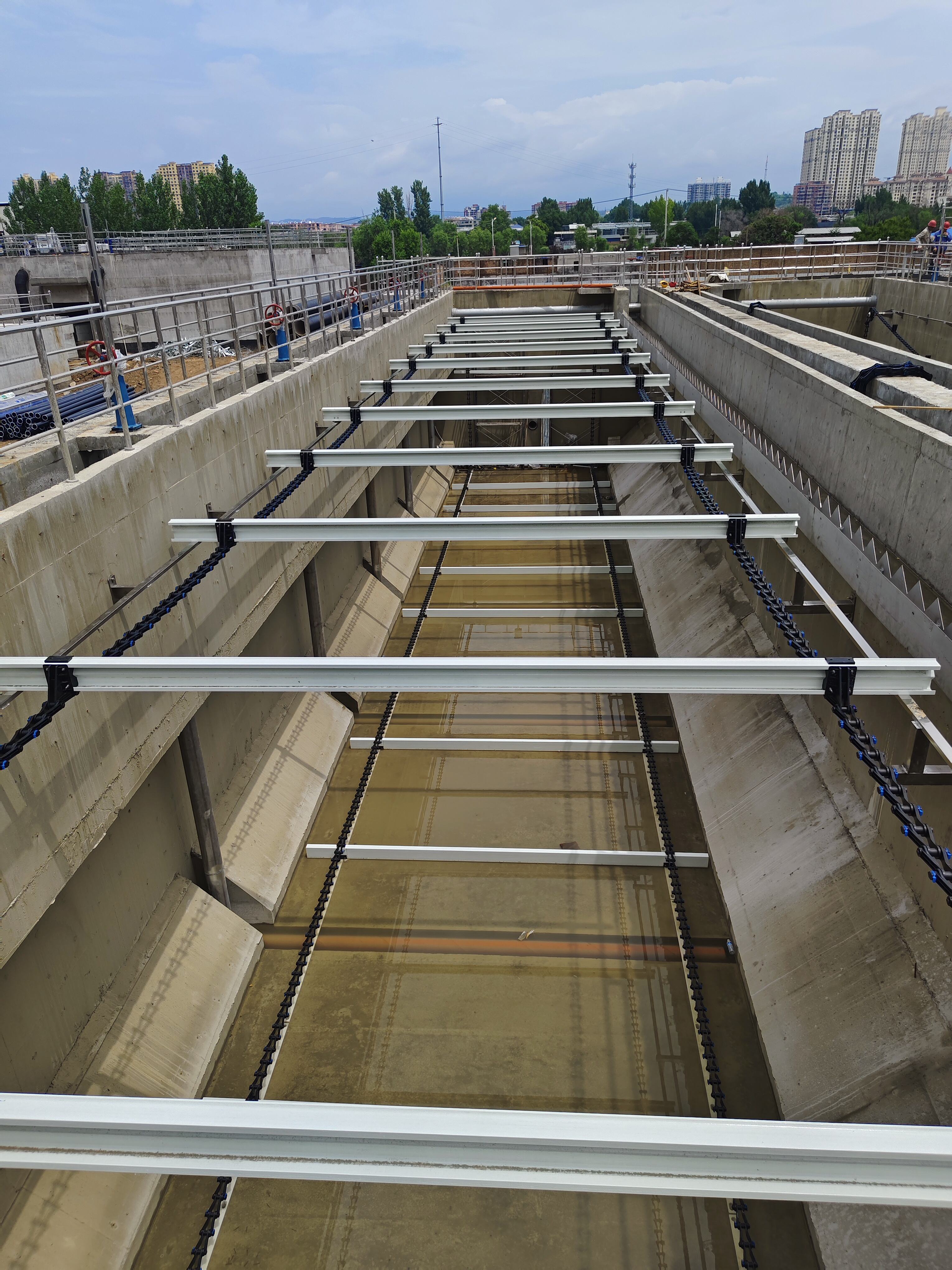
High viscosity sludge, common in industrial applications like food processing, petroleum refining, pulp and paper production, and chemical manufacturing, behaves more like a thick paste than water, presenting substantial resistance to movement. A standard scraper system can easily become overloaded, stall, or suffer accelerated wear when faced with such material. A high viscosity sludge scraping solution is therefore engineered with a focus on high torque, robust structural integrity, and specialized flight design. The drive system is the heart of this solution, featuring a powerful motor and a high-ratio gear reducer capable of generating immense pulling force to move the heavy, sticky sludge mass without stalling. The structural components, including the bridge, shafts, and traction chains, are oversized and made from high-strength materials to withstand the increased loads. The scraper flights are designed with a specific geometry to prevent sludge from rolling over the top of the blade or adhering to its surface; sometimes, they may incorporate vibrators or oscillating mechanisms to help "release" the sticky solids. In a biodiesel plant, the glycerin and soap-based sludge byproduct is exceptionally viscous and can solidify if not moved promptly. A tailored high-viscosity scraper system in this setting would use a low-speed, high-torque hydraulic or electric drive and reinforced flights with a polished, non-stick surface finish to ensure positive movement of the material towards the hopper, preventing buildup that could harden and require manual cleaning. This solution is not off-the-shelf but is meticulously designed based on rheological studies of the specific sludge. We specialize in creating such custom solutions. Please contact our engineering department to discuss your high-viscosity sludge challenges and initiate the design process for a effective scraping system.