 EN
EN

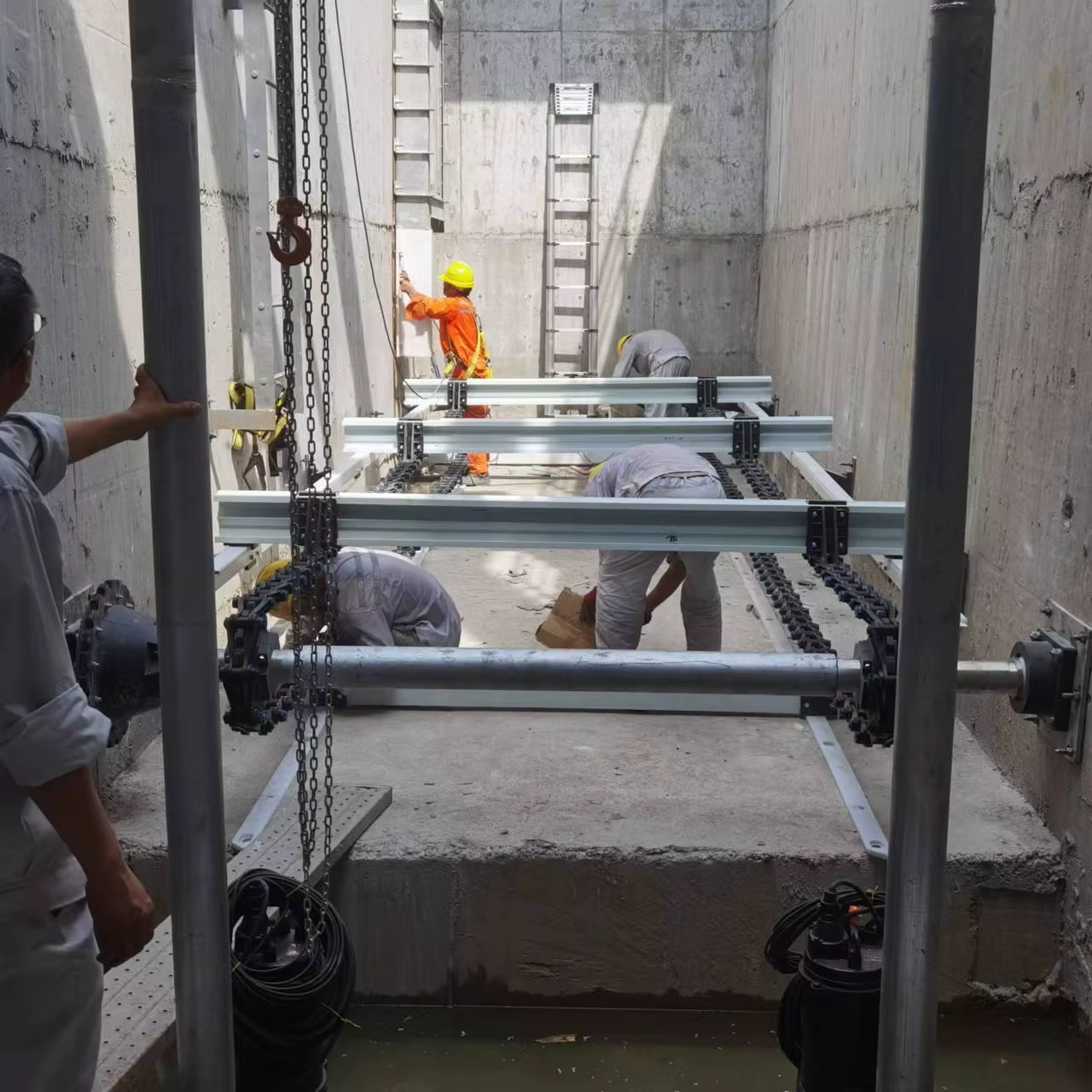
Match Scraper System Design to Your Wastewater Characteristics
How Solids Concentration, Fibrous Content, and Abrasiveness Affect Scraper Selection
The physical and chemical makeup of the sludge directly dictates the mechanical demands on a scraper system. A mismatch often leads to premature failure or chronic underperformance. For instance, a high solids concentration—typically above 3% by weight—generates significant drag force, requiring a drive mechanism with higher torque and reinforced structural components. Operations with sludge exceeding 5% solids saw a 30% reduction in service life for standard-duty chain-and-flight systems (WEF 2023). Conversely, low-density, light sludge can be managed with simpler, center-drive circumferential collectors.
The presence of fibrous material—commonly from industrial textile or food processing discharge—introduces tangling and clogging risks. This demands a scraper design that minimizes pinch points. Reciprocating rake systems typically outperform chain-and-flight setups here, as submerged chains are prone to entanglement. Abrasive grit, such as sand from collection systems, accelerates wear on submerged moving parts. Optimal design therefore prioritizes wear-resistant materials and geometry over generic configurations.
| Sludge Characteristic | Key Design Impact | Recommended Scraper System Feature |
|---|---|---|
| High Solids (>3% wt.) | Excessive torque and drag load | Heavy-duty chain with reinforced flights, high-torque drive |
| Fibrous Material | Tangling and clogging | Reciprocating rake or cable-driven system with no submerged chains |
| Abrasive Grit | Rapid wear on pins and bushings | Full-length wear shoes, hardened steel components |
Influence of Temperature, Flow Variability, and Hydraulic Constraints (Depth, Headloss, Channel Geometry)
System design must account for the operational environment and hydraulic profile. Temperature fluctuations change water viscosity and affect thermal expansion of structural components. In cold climates, thickened sludge may become more viscous, requiring additional drive power; in warmer streams, increased biological activity can produce corrosive off-gassing, influencing material selection. Facilities experiencing a 20°C seasonal temperature swing showed a 15% higher rate of non-metallic component failure due to thermal cycling stress.
Flow variability presents a distinct challenge. Basins subject to storm surges or high diurnal peaking factors require scrapers engineered to withstand sudden hydraulic loads—preventing lift-off from the tank floor or flow channeling around the collector. Physical constraints—including depth, allowable headloss across the mechanism, and channel geometry—define the performance envelope. In deep rectangular basins (>5 m), traveling bridge scrapers maintain hydraulic integrity without short-circuiting risk, but may require a specialized torque tube design to prevent deflection. The scraper is not merely a solids removal device—it functions as an integral part of the basin’s hydraulic control system.
Compare Core Scraper System Types: Performance, Retrofit Needs, and Real‑World Reliability
Traveling Bridge vs. Chain‑and‑Flight vs. Reciprocating: Removal Efficiency and SS/BOD Reduction Benchmarks
The choice of scraper system directly impacts primary clarifier performance. Benchmarks from full-scale installations show distinct removal profiles:
| Scraper Type | SS Removal Efficiency | BOD Removal Efficiency | Typical Basin Loading (m³/m²·h) |
|---|---|---|---|
| Traveling Bridge | 85–95% | 50–65% | 20–30 |
| Chain‑and‑Flight | 85–93% | 52–63% | 25–35 |
| Reciprocating | 80–90% | 45–60% | 15–25 |
Traveling-bridge systems consistently achieve the highest suspended solids (SS) removal—often exceeding 90% with dense, fibrous sludge (WEF 2022). Chain-and-flight designs deliver comparable biochemical oxygen demand (BOD) reduction but incur higher maintenance frequency due to wear on pins and sprockets. Reciprocating scrapers, while mechanically simpler, yield slightly lower removal rates and suit smaller basins with stable flows. Real-world reliability diverges under abrasive or variable organic loading: traveling-bridge units sustain efficiency longer, whereas chain-and-flight mechanisms experience accelerated wear. Selection should therefore be grounded in influent solids concentration and expected load variability—not just nominal capacity.
Retrofit Feasibility: Assessing Civil Modifications, Tank Downtime, and Structural Load Impacts
Retrofitting an existing clarifier demands careful evaluation of physical constraints and process continuity:
- Traveling-bridge retrofits typically require only minor modifications to tank walls and inlet/outlet structures. Their lightweight bridge and drive assembly impose minimal added structural load, and installation usually completes in 2–3 days of basin downtime—often using a temporary bypass.
- Chain-and-flight conversions are more invasive. New drive-head housings, return-idler sprockets, and flight-chain guides may necessitate concrete cutting and reinforcement, extending downtime to 1–2 weeks. The heavier drive train also increases structural load on tank walls—sometimes requiring strengthening.
- Reciprocating scraper retrofits involve substantial civil work: carriage rail supports and hydraulic or electromechanical drive units demand precise alignment and robust foundation pads. Downtime can reach 2–3 weeks, and dynamic reciprocating loads may require additional anchoring or bracing.
A 2023 upgrade at a 50 MLD facility demonstrated that selecting a traveling-bridge scraper reduced retrofit duration by 60% and eliminated the need for concrete reinforcement—underscoring how matching scraper type to existing tank geometry and operational constraints improves project outcomes.
Evaluate Total Cost of Ownership: Corrosion Resistance, Maintenance Burden, and Lifecycle Economics
Material Performance in Aggressive Environments: H₂S Exposure, Chlorinated Influent, and Galvanic Corrosion Risks
Material selection directly determines total cost of ownership (TCO), where initial purchase often represents only 20–30% of lifetime expenses. In wastewater environments, hydrogen sulfide (H₂S) causes sulfide stress cracking; chlorinated influent accelerates pitting and crevice corrosion; and galvanic corrosion arises when dissimilar metals—such as stainless steel components contacting carbon steel supports—are exposed to conductive process water. These mechanisms drive unplanned downtime and frequent component replacement.
Specifying high-molybdenum stainless steels (e.g., UNS S32205 or S32750) or advanced polymer coatings that resist both acidic attack and electrochemical reactions can extend service intervals significantly. A lifecycle analysis shows that reducing corrosion-driven maintenance cuts the 70–80% of TCO allocated to repairs and outages—making upfront material investment a decisive factor in long-term economics.
Ensure Future-Ready Integration: Odor Control Compatibility and Scalable Expansion Support
When upgrading wastewater clarifiers, the scraper system must support present and future odor control requirements. Modern designs integrate sealed covers, gas collection ports, and corrosion-resistant materials to enable direct coupling with chemical scrubbers, biofilters, or activated carbon units. Stainless steel or FRP (fiber-reinforced plastic) scraper bridges with integrated odor containment hoods capture off-gases at the source—reducing fugitive H₂S emissions, simplifying compliance with air quality regulations, and avoiding costly retrofits that demand additional tank downtime and civil modifications.
Equally critical is the ability to scale treatment capacity without replacing the entire scraper system. Modular designs—featuring extendable flights, variable-speed drives, and add-on collector headers—allow facilities to increase surface loading rates or lengthen channels as influent flows grow. For example, a chain-and-flight system with bolt-on extensions can be lengthened with minimal civil works, preserving the original drive unit and lowering capital expenditure versus full replacement. This scalability ensures the scraper investment remains operationally and economically viable across decades of evolving regulatory, environmental, and flow demands.
FAQs
- What factors should I consider when selecting a scraper system for my clarifier? Consider sludge characteristics (solids concentration, fibrous content, abrasiveness), hydraulic constraints, operational temperature swings, and flow variability to choose the most suitable system design.
- What are the key differences between traveling bridge, chain-and-flight, and reciprocating scrapers? Traveling bridge systems excel in SS removal efficiency and reliability under varying conditions; chain-and-flight systems are effective for BOD reduction but require higher maintenance; reciprocating systems suit smaller basins with stable flows but have lower overall efficiency.
- How can I minimize downtime during a scraper system retrofit? Opt for systems like traveling bridges, which typically require fewer civil modifications and shorter installation times compared to chain-and-flight or reciprocating systems.
- What materials are best for scrapers in wastewater environments? High-molybdenum stainless steels and advanced polymer coatings can resist corrosion from H₂S exposure or chlorinated influent, ensuring longer service life and lower total cost of ownership.
- Can scraper systems accommodate future capacity increases? Yes, modular designs with extendable features enable scaling without full replacement, ensuring long-term operational and financial viability.
Table of Contents
- Match Scraper System Design to Your Wastewater Characteristics
- Compare Core Scraper System Types: Performance, Retrofit Needs, and Real‑World Reliability
- Evaluate Total Cost of Ownership: Corrosion Resistance, Maintenance Burden, and Lifecycle Economics
- Ensure Future-Ready Integration: Odor Control Compatibility and Scalable Expansion Support