 EN
EN

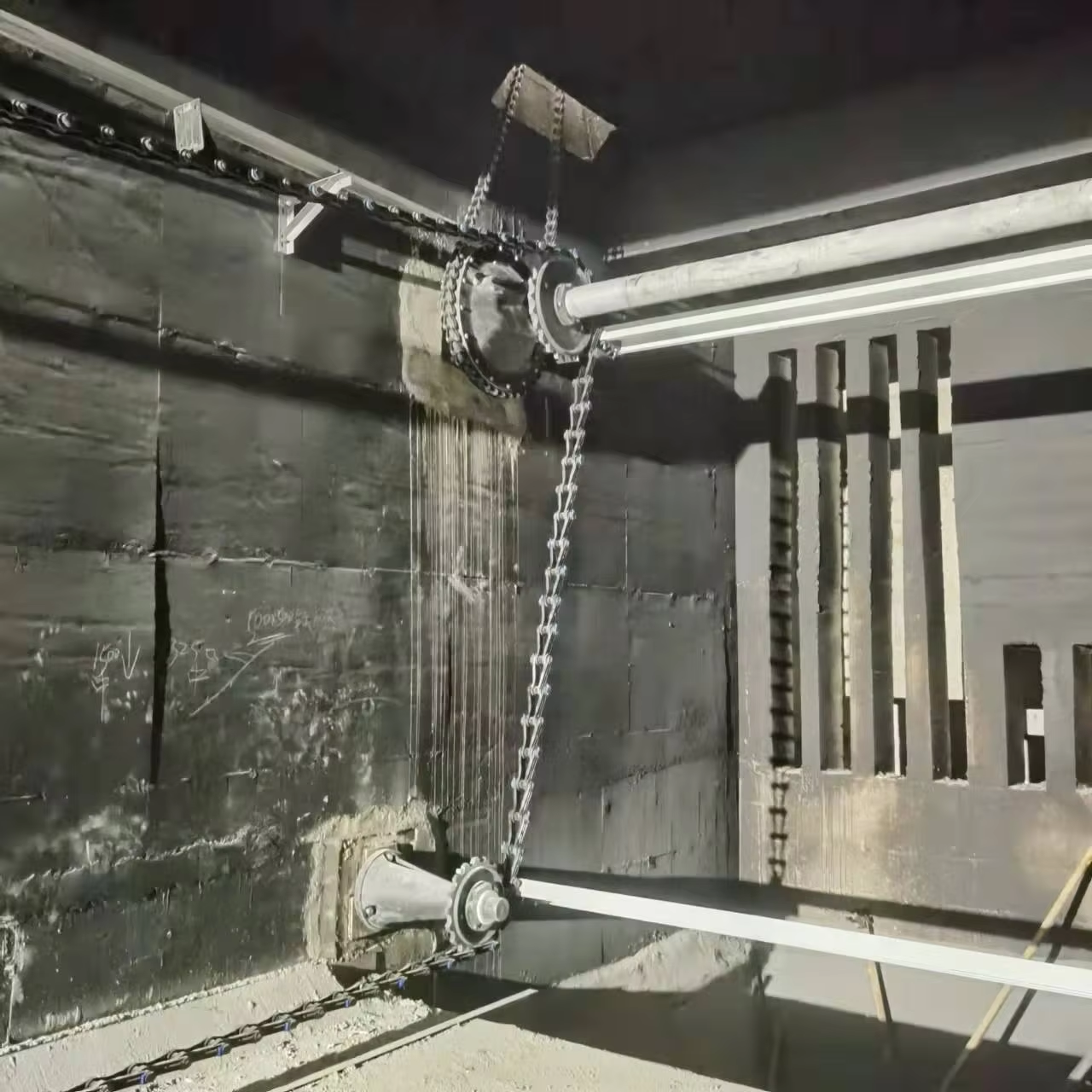
Integrated Earthmoving: How Mud Scrapers Eliminate Handoffs and Cut Cycle Time
Why single-platform dig-load-haul-spread reduces idle time and coordination overhead
Conventional earthmoving relies on separate machines—excavators for digging, haul trucks for transport, and bulldozers or motor graders for spreading—creating mandatory handoffs between stages. Each step must fully complete before the next can begin, introducing unavoidable idle time across the fleet. Supervisors also spend significant effort coordinating machine sequencing, resolving bottlenecks, and managing interdependent crews. A mud scraper integrates all four functions—digging, loading, hauling, and spreading—into a single platform, eliminating cross-machine dependencies entirely. This removes both mechanical wait states and human coordination overhead, increasing asset utilization and freeing project leadership to focus on planning and quality control rather than real-time traffic management.
How compressed cycle time directly lowers fuel consumption, labor hours, and equipment-holding costs
Shorter end-to-end cycle times deliver immediate, measurable reductions in three major variable cost categories. First, less total engine runtime cuts fuel use—often the largest recurring operational expense on earthmoving projects. Second, fewer work hours translate directly into lower billed labor costs across the crew. Third, equipment holding costs—including depreciation, insurance, financing, and storage—are tied to deployment duration; compressing timelines allows machines to redeploy faster to other revenue-generating jobs. For contractors operating under fixed-price contracts or tight margin targets, this acceleration improves cash flow and boosts return on equipment investment.
Case evidence: 37% total cycle time reduction on USACE Louisiana levee project (2023)
A 2023 post-project performance review by the U.S. Army Corps of Engineers (USACE) for a Louisiana levee upgrade quantified these gains. On identical sections moving 120,000 cubic yards of earthen material, an integrated scraper workflow achieved a 37% reduction in total cycle time compared to a conventional fleet of excavators, dump trucks, and bulldozers. The result held after controlling for site-specific variables like moisture content and haul distance—and enabled the project to finish two weeks ahead of schedule, avoiding liquidated damages and accelerating downstream construction milestones.
Labor Optimization: Single-Operator Efficiency vs. Multi-Machine Crews
Reduced staffing requirements: One mud scraper operator replaces 3–4 crew members in conventional cut-and-fill
Traditional cut-and-fill workflows demand dedicated operators for each machine type—plus spotters, grade checkers, and dispatch coordinators—to maintain consistent production. This typically requires 3–4 skilled personnel just to move and place material reliably. A mud scraper consolidates those tasks into one seamless operation managed by a single trained operator. No auxiliary support is needed for loading, unloading, or basic grading—eliminating not only headcount but also communication delays, misaligned shift schedules, and on-site safety handoffs that routinely slow progress.
Labor cost leverage: $82/hr operator vs. $210/hr equivalent multi-machine crew (leading heavy equipment manufacturer TCO Report, 2024)
Labor represents a dominant share of earthmoving OPEX—and the cost differential is decisive. According to a 2024 total cost of ownership report from a leading heavy equipment manufacturer, the average fully burdened hourly cost of a single mud scraper operator is $82, versus $210 per hour for an equivalent multi-machine crew performing the same volume of work. Over a standard 40-hour week, that’s a $128/hour advantage—translating to over $250,000 in annual labor savings per replaced crew. Smaller crews also reduce hidden overhead: fewer personnel means lower costs for transportation, onboarding, PPE, worker’s compensation, and site logistics management.
Lower Maintenance Burden: Why Mud Scrapers Deliver Higher Uptime and Reduced OPEX
Fewer moving parts and no auxiliary loading/hauling machines reduce failure points and downtime
Conventional bulk earthmoving depends on multiple high-stress assets—excavators with complex hydraulic booms, articulated haul trucks with heavy-duty drivetrains, and spreaders with precision blade controls—each introducing independent failure modes. Every machine adds engines, transmissions, hydraulic pumps, hoses, filters, tires, and electrical systems requiring inspection, lubrication, and replacement. A mud scraper performs the same work with one powertrain, one hydraulic system, and one set of wear components. That consolidation eliminates cascading failures caused by mismatched machine availability and dramatically lowers the probability of unplanned downtime.
28% lower scheduled maintenance spend vs. excavator-truck fleets (CMAA Benchmark Survey, 2023)
Scheduled maintenance is a predictable yet often underestimated cost driver. The 2023 CMAA Benchmark Survey found that sites using mud scrapers for primary earthmoving reported 28% lower scheduled maintenance spend than comparable sites running excavator-and-haul-truck fleets. This reflects reduced service frequency across the board: teams maintain one engine instead of three to five, one hydraulic system instead of multiple parallel circuits, and one drive train instead of several. Less routine downtime also means more billable hours per week—further amplifying the operational ROI beyond direct maintenance savings.
Total Cost of Ownership: Calculating the Hidden ROI of Mud Scraper Deployment
CAPEX-to-OPEX shift: Replacing mixed-fleet capital investment with scalable, single-platform operational efficiency
Conventional earthmoving demands substantial upfront capital—purchasing or leasing excavators, loaders, haul trucks, and support equipment—tying up working capital and increasing balance-sheet risk. A mud scraper replaces that fragmented fleet with one versatile, high-productivity platform. This shifts cost structure from large, inflexible CAPEX commitments toward a more agile, volume-responsive OPEX model—where equipment investment aligns directly with current project scope and can scale up or down without redundant asset purchases.
Payback modeling: 14-month ROI threshold for sites moving >50,000 cubic yards/month
Lifecycle analysis confirms rapid payback for high-utilization operations. For sites consistently moving more than 50,000 cubic yards per month, cumulative savings from reduced labor ($250K+/year), lower fuel use (15–20% typical reduction), and decreased maintenance (28% lower spend) offset the initial acquisition cost of a mud scraper in as little as 14 months. Beyond that point, ongoing earthmoving output contributes almost entirely to gross margin—without the layered overhead of managing multiple machines, crews, and maintenance schedules.
FAQ
1. What is a mud scraper, and how does it work?
A mud scraper is a single-platform machine that integrates digging, loading, hauling, and spreading tasks into one operation. It eliminates the need for multiple machines and the handoffs between them, making earthmoving projects more efficient.
2. How does a mud scraper reduce costs?
Mud scrapers reduce costs by cutting cycle times, which lowers fuel consumption, labor hours, and maintenance expenses. Additionally, they require only one operator instead of multiple, decreasing staffing costs significantly.
3. What are the operational savings of using a mud scraper?
Operational savings include up to 37% shorter cycle times, 28% lower maintenance costs compared to excavator-truck fleets, and over $250,000 in annual labor savings per replaced crew.
4. Are mud scrapers suitable for large-scale operations?
Yes, mud scrapers are especially effective for large-scale operations. For sites moving more than 50,000 cubic yards per month, they can achieve ROI within 14 months.
5. What projects have benefited from mud scrapers?
Notable projects, such as the 2023 U.S. Army Corps of Engineers levee upgrade in Louisiana, experienced a 37% reduction in cycle time, finishing ahead of schedule with significant cost and time savings.
Table of Contents
- Integrated Earthmoving: How Mud Scrapers Eliminate Handoffs and Cut Cycle Time
- Labor Optimization: Single-Operator Efficiency vs. Multi-Machine Crews
- Lower Maintenance Burden: Why Mud Scrapers Deliver Higher Uptime and Reduced OPEX
- Total Cost of Ownership: Calculating the Hidden ROI of Mud Scraper Deployment
- FAQ