 EN
EN

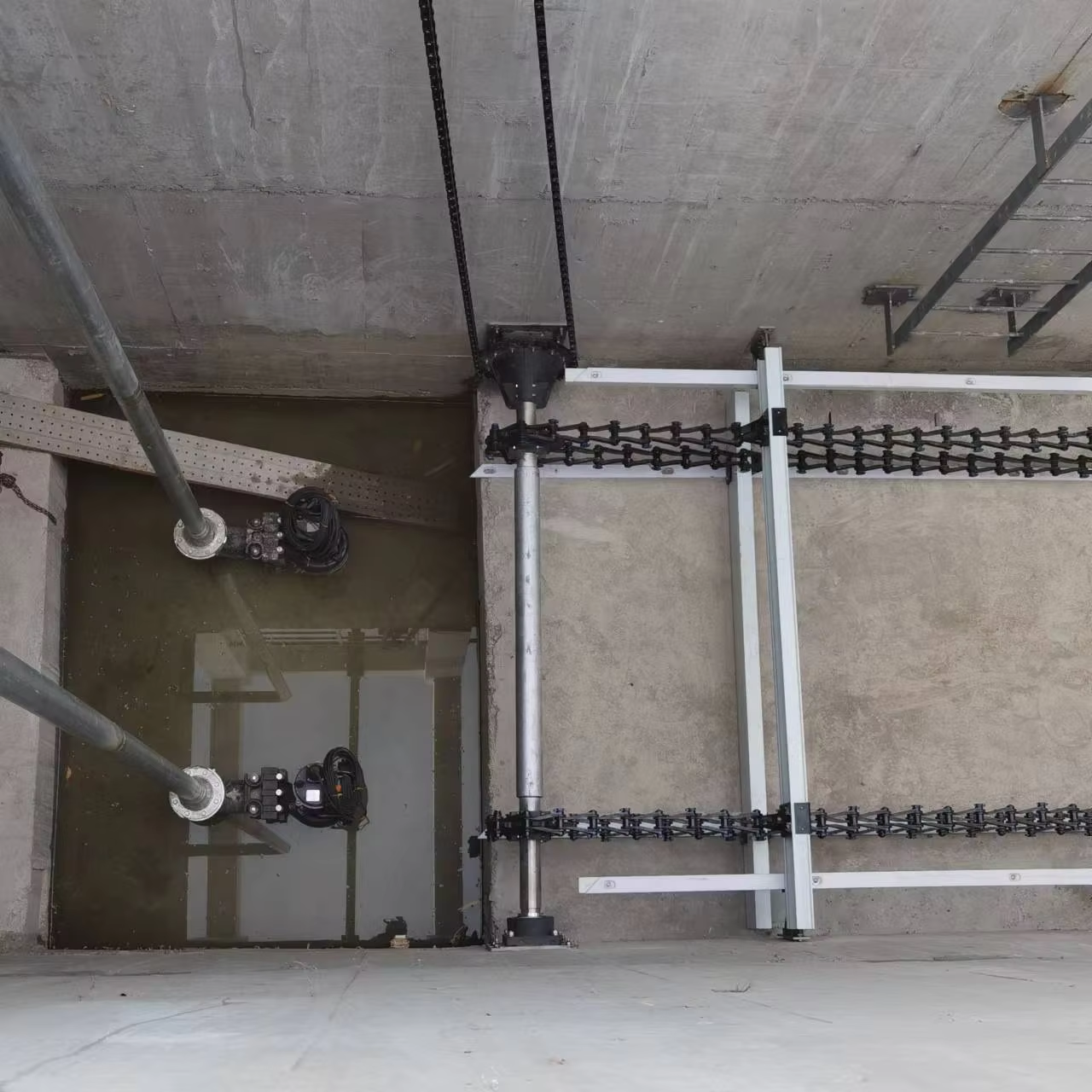
Optimize Tank Hydraulics and Scraper Integration
Aligning scraper motion dynamics with flow velocity profiles in rectangular vs. circular tanks
In rectangular sedimentation tanks, flow moves linearly along the tank length—so continuous chain-driven scrapers moving parallel to this direction efficiently convey settled sludge to an end collection ditch without disturbing the stable sludge blanket. In contrast, circular tanks feature radial flow: velocity peaks at the center inlet and declines toward the outer walls. Rotary scrapers are engineered to match this gradient, slowly conveying sludge inward toward a central outlet. When scraper travel speed is tuned to local flow velocity—rather than fixed at a single rate—re-suspension of settled solids drops by up to 15%, per 2023 industry engineering data from the Water Environment Federation (WEF). This alignment strengthens sedimentation efficiency by preserving sludge capture integrity.
Weir loading, inlet baffle placement, and their effect on sludge blanket stability and scraper path consistency
Inlet baffles must be precisely positioned to distribute incoming flow uniformly across the tank width. Poor placement creates velocity imbalances that displace the sludge blanket laterally—shifting it outside the scraper’s designed path and compromising removal. Similarly, excessive weir loading increases upward flow near the effluent outlet, lifting fine particles back into suspension and forcing scrapers to re-process material unnecessarily. Together, optimized baffle geometry and calibrated weir loading improve sludge blanket stability by up to 28%, as validated in pilot studies conducted by the U.S. EPA’s Wastewater Technology Transfer Program. The result is more consistent scraper travel, reduced mechanical stress, and lower long-term operational wear—all achievable without capital-intensive upgrades.
Select the Right Sedimentation Scraper Type and Size
Performance comparison: bridge-mounted, chain-and-flight, and low-profile scrapers across sludge concentration ranges
Scraper selection must align with typical sludge concentration—not just tank geometry. Bridge-mounted scrapers excel in low-solids applications (<2% TSS), offering simplicity, low initial cost, and dependable performance in small to mid-sized rectangular tanks. Chain-and-flight systems are the workhorse for moderate concentrations (2–5% TSS), delivering uniform sludge transport across large rectangular basins—though their multiple articulating components require more frequent inspection. For high-concentration sludge (>5% TSS), low-profile scrapers minimize hydrodynamic drag and blade-induced turbulence, significantly reducing re-suspension and improving effluent clarity while lowering energy demand.
Dimensioning critical parameters—torque, travel speed, and blade angle—for tanks 10–50 m in diameter
For circular tanks ranging from 10 to 50 m in diameter, precise dimensioning of torque, travel speed, and blade angle ensures reliable operation without over-engineering or premature failure. Torque scales predictably with diameter and sludge load: 10 m tanks typically need 1,500–3,000 Nm; 50 m tanks require 12,000–20,000 Nm to prevent motor stalling under peak load. Travel speed should stay within 0.5–2 m/min—faster speeds disturb settled solids and degrade effluent quality; slower speeds risk uneven accumulation and localized compaction. A blade angle of 20–30° strikes the optimal balance between effective sludge conveyance and minimized power draw, reducing strain on gearmotors and drive chains.
Retrofit for Energy Efficiency and Sludge Quality
Quantifying energy savings: low-profile scraper retrofits reduce motor demand by 22–38% (EPA 2022)
Retrofitting aging scraper systems with modern low-profile designs delivers measurable gains in both energy use and sludge quality. As documented in the U.S. Environmental Protection Agency’s 2022 Energy Efficiency in Wastewater Treatment report, these upgrades cut motor demand by 22–38%—primarily by eliminating drag from outdated blade profiles and misaligned flights. Equally impactful is the improvement in sludge blanket compaction: total solids concentration rises by up to 10%, easing downstream dewatering loads and reducing polymer consumption, hauling volume, and associated emissions. With typical payback periods of 3–5 years driven solely by energy savings, such retrofits represent one of the highest-ROI operational improvements available to clarifier operators.
Sustain Efficiency Through Targeted Maintenance Practices
Preventive maintenance schedules, wear-part monitoring, and integration of real-time diagnostics for sedimentation scrapers
Sustained scraper performance hinges on proactive—not reactive—maintenance. Core practices include scheduled blade cleaning to prevent buildup-induced imbalance, lubrication of sprockets and bearings per OEM guidelines, and visual inspections for worn flight edges, stretched chains, or bent support arms. Early detection of minor deviations—like 2 mm of blade misalignment or 5% chain elongation—prevents path inconsistency and unnecessary energy spikes. Integrating real-time diagnostics for motor torque and travel speed enables predictive intervention: facilities using such monitoring report up to 30% fewer unplanned outages, according to World Bank 2021 wastewater infrastructure benchmarking data. This targeted approach preserves sludge removal consistency, extends equipment life, and avoids costly emergency repairs.
FAQ
What is the importance of aligning scraper travel speed with flow velocity?
Aligning the scraper travel speed with flow velocity reduces the re-suspension of settled solids by up to 15%, improving sedimentation efficiency and sludge capture integrity.
How can inlet baffle placement affect sludge blanket stability?
Incorrect inlet baffle placement can cause velocity imbalances that displace the sludge blanket, compromising scraper performance and operational efficiency.
What are the advantages of low-profile scrapers for high-sludge concentrations?
Low-profile scrapers reduce hydrodynamic drag and turbulence, enhancing sludge removal efficiency while lowering energy consumption.
How can retrofitting old scraper systems improve efficiency?
Retrofitting with low-profile scraper designs cuts motor demand by 22–38%, increases sludge compaction, and reduces operational costs and emissions.
Why is preventive maintenance important for sedimentation scrapers?
Preventive maintenance ensures consistent sludge removal, extends equipment life, and reduces unplanned outages by addressing issues early, like blade misalignment or chain elongation.
Table of Contents
- Optimize Tank Hydraulics and Scraper Integration
- Select the Right Sedimentation Scraper Type and Size
- Retrofit for Energy Efficiency and Sludge Quality
- Sustain Efficiency Through Targeted Maintenance Practices
-
FAQ
- What is the importance of aligning scraper travel speed with flow velocity?
- How can inlet baffle placement affect sludge blanket stability?
- What are the advantages of low-profile scrapers for high-sludge concentrations?
- How can retrofitting old scraper systems improve efficiency?
- Why is preventive maintenance important for sedimentation scrapers?