 EN
EN
Key Selection Criteria for Municipal Sewage Treatment Plant Scrapers
Matching Scraper Design to Basin Geometry and Hydraulic Flow Profiles
Getting the right sludge scraper for a job depends heavily on matching it to the specific tank size and how water moves through the system. When dealing with round tanks smaller than 20 meters across, peripheral drive systems work best because they use those natural spinning motions created during operation. But things change when looking at long rectangular basins over 30 meters in length. These need either truss mounted scrapers or chain flight designs since regular models just can't cover such vast distances effectively without losing performance somewhere along the line. According to recent research from last year's wastewater infrastructure report, cities that switched to properly sized truss scrapers saw pretty impressive results: around three quarters fewer breakdowns compared to before, better solid material collection rates by about twenty two percent, plus maintenance crews had to intervene roughly thirty percent less often too. That makes sense when considering all the wear and tear involved in daily operations.
Flow patterns directly influence sludge settling rates. Scraper configurations must prevent short-circuiting while accommodating inlet and outlet positions—misalignment can increase solids carryover by up to 40% (Water Environment Federation, 2024).
Evaluating Performance: Solids Capture Efficiency, Reliability, and Maintenance Intervals
Performance hinges on three measurable metrics:
- Solids capture efficiency: Target >95% removal for primary clarifiers, achievable through flight-speed calibration to sludge rheology. High-density sludge (>25% solids) requires reinforced chain systems.
- Reliability: Chain-and-flight systems in abrasive environments show 30% higher failure rates than submerged helical scrapers; non-metallic chain systems demonstrate 40% longer service life in corrosive media.
- Maintenance intervals: Optimized designs extend service cycles to 18–24 months. Plants with quarterly maintenance schedules report 53% lower unplanned downtime costs (Ponemon Institute, 2023).
Total Cost of Ownership (TCO) analysis should prioritize robustness over initial price—equipment failures incur average remediation costs of $740k annually in municipal facilities.
Scraper Types by Basin Configuration in Municipal Sewage Treatment Plants
Selecting the optimal sludge scraper requires matching mechanical designs to specific basin geometries. Rectangular and circular clarifiers demand fundamentally different approaches to ensure efficient solids removal while minimizing operational disruptions.
Rake-and-Chain Systems for Rectangular Primary Clarifiers
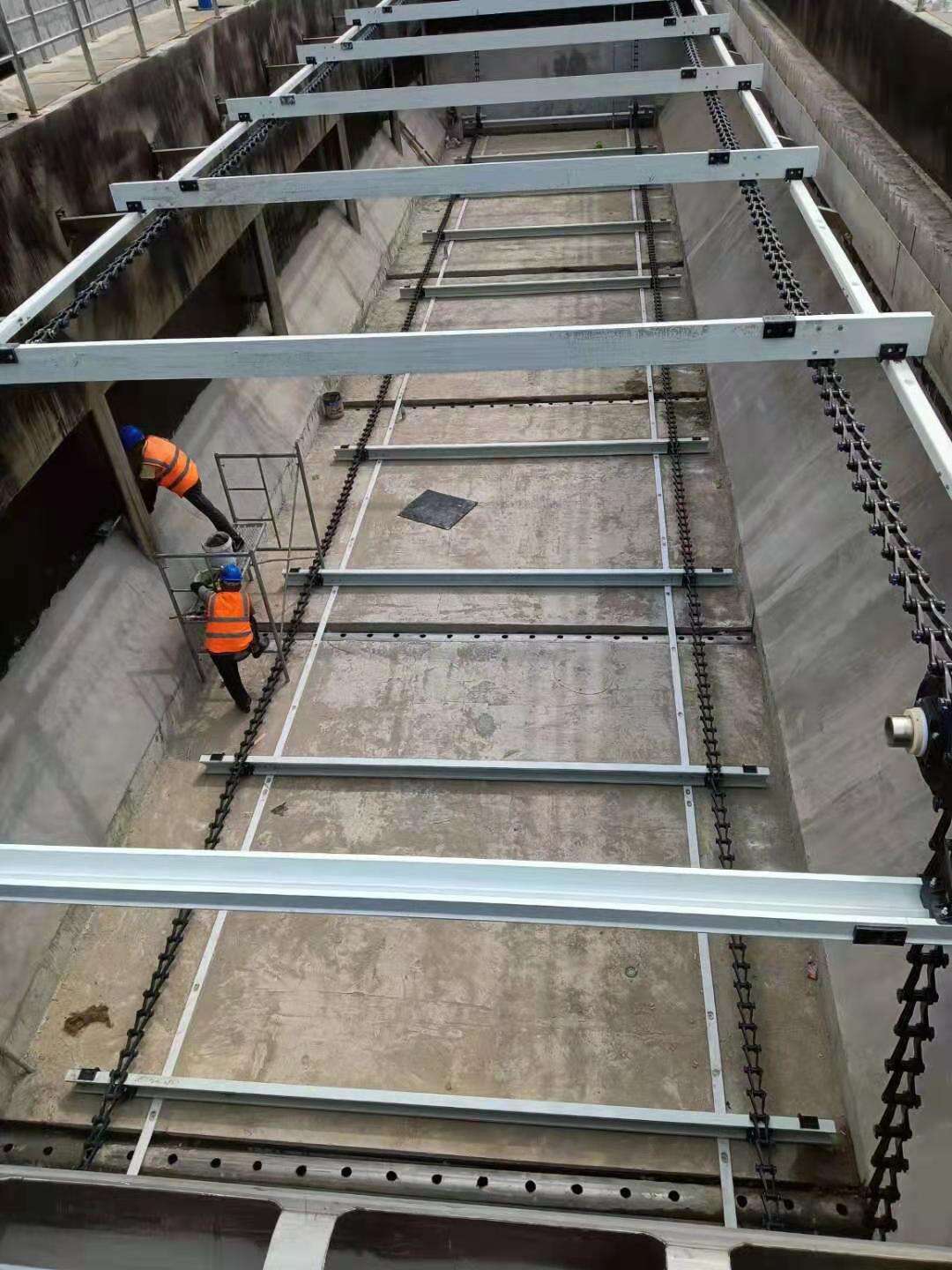
Rake and chain systems work really well in those rectangular primary clarifiers we see all over the place. The setup has these continuous chains with little scrapers attached running the entire length of the basin. What happens is pretty straightforward: the scrapers push the settled sludge towards those collection hoppers at the inlet side, while at the same time they're also grabbing surface scum and moving it towards the skimming equipment. This particular design deals quite effectively with thick primary sludge when the flow moves in straight lines. Most installations have several scraper flights along the way, usually about three meters between each one, which keeps the sludge moving consistently without backup problems. Another big plus for these systems is their modular nature. Municipal plants can often install them as retrofits without too much hassle. According to various wastewater infrastructure reports, these systems cut down on maintenance issues by around 30% compared to other options available today because there are fewer complicated parts involved in the mechanics.
Center-Drive vs. Peripheral-Drive Scrapers for Circular Secondary Clarifiers
Secondary clarifiers that are circular in shape typically come with two main scraper options: center drive or peripheral drive systems, and they work best for different sized operations. With center drive models, the motor sits right in the middle on a bridge that spins around, pushing all that sludge towards the hopper at the center point. These tend to be good choices when dealing with tanks smaller than about 18 meters across. Peripheral drive units take a different approach by placing their motors along the edge of the tank instead. They use special wheels to roll the whole bridge structure around the perimeter. What makes this setup better for bigger tanks? Well, it spreads out the force more evenly so there's less wear and tear when things get really busy with solids. Sure, center drives might cost less initially, but peripheral systems just hold up better over time especially in those large clarifiers where the sludge isn't too heavy. Most municipal wastewater plants go with peripheral drives whenever their tanks reach 25 meters or more because nobody wants to deal with bent bridges or patchy sludge removal later on.
Stage-Specific Sludge and Scum Management in Municipal Sewage Treatment Plants
Dual-Purpose Units: Coordinated Sludge Scraping and Surface Skimming
Sewage treatment plants run into different kinds of sludge depending on where they are in the process. The primary clarifiers tend to collect heavy stuff that settles down pretty quickly, whereas what comes out of secondary clarifiers is much lighter stuff made up mostly of biological material. And don't even get me started on scum layers - those can be all sorts of things from fats and oils right down to whatever bits managed to float through the system. That's why dual purpose units have become so popular lately. These systems handle both sludge collection and surface skimming all at once, which cuts down on space requirements and makes operations simpler than having completely separate pieces of equipment for each task. There are plenty of good reasons why operators prefer them now.
- Synchronized removal: Simultaneous bottom scraping and surface skimming prevent settled sludge disturbance during scum collection
- Reduced polymer consumption: Timely scum removal minimizes interference with flocculation chemistry in subsequent stages
- Space optimization: Single-unit installation conserves valuable plant real estate
Operational studies show integrated systems lower maintenance intervals by 25% compared to standalone equipment. Synchronized operation also enhances odor control by rapidly removing volatile organic compounds from the surface. Proper unit sizing ensures reliable performance across varying hydraulic loading conditions typical in municipal plants.
FAQ
What is the importance of matching scraper design to basin geometry?
Matching scraper design to basin geometry is crucial for efficient solids removal and minimizing operational disruptions in municipal sewage treatment plants.
How does the flow pattern affect sludge settling rates?
Flow patterns directly influence sludge settling rates, and misalignment can increase solids carryover by up to 40%, affecting the performance of sludge scrapers.
What are the benefits of dual-purpose units in sewage treatment plants?
Dual-purpose units offer synchronized sludge scraping and surface skimming, reducing space requirements and enhancing operational efficiency by managing both tasks simultaneously.