 EN
EN

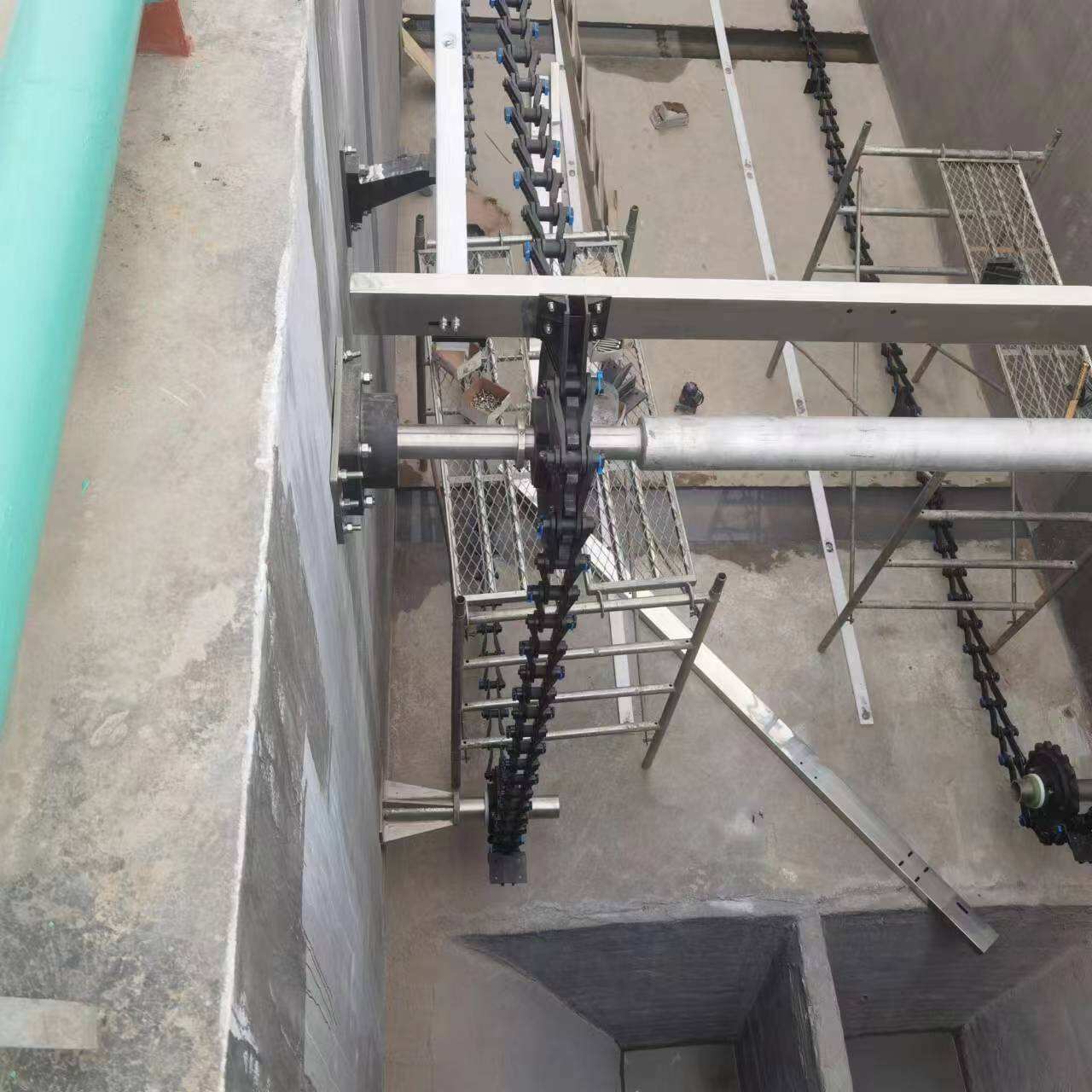
The Corrosion Challenge in Wastewater Sedimentation Tanks
Sedimentation tanks in wastewater treatment plants suffer serious corrosion problems because of sulfuric acid produced when certain bacteria get active. This happens especially in the parts of the tank where there's no oxygen, as sulfate reducing bacteria turn sulfates into hydrogen sulfide gas. The gas then reacts with air at the surface to form sulfuric acid. This acid eats away at concrete walls, railings, and all sorts of mechanical bits inside the tanks. Even when these structures are coated or lined with epoxy, the microbial influenced corrosion still speeds things up. Traditional stainless steel sludge scrapers aren't safe either. Chlorides, sulfides, and those nasty volatile organic compounds find tiny cracks and start causing trouble. They lead to pitting here and there, plus crevice corrosion and stress related cracking that gets worse over time. All this damage messes with consistent sludge removal and means replacing equipment way before it should be retired. Non metal sludge scrapers made specifically for this job stand up better against all these chemicals. They use special polymers that don't react electrochemically. Plants dealing with really aggressive wastewater chemistry often spend around 30% of their yearly maintenance budget fighting corrosion issues. So choosing materials that last longer isn't just good engineering, it's actually essential for keeping operations running smoothly without breaking the bank in the long run.
How Non-Metallic Sludge Scrapers Deliver Superior Corrosion Resistance
Polymer and Composite Material Science Behind Corrosion Immunity
Non-metallic sludge scrapers leverage engineered polymers like UHMWPE (Ultra-High Molecular Weight Polyethylene) and fiberglass-reinforced plastics (FRP) to achieve near-total corrosion immunity. These materials eliminate electrochemical pathways through three mechanisms:
- Molecular density (0.94â0.98 g/cm³) creates non-porous barriers against microbial penetration and acid ingress
- Chemically inert polymer chains resist oxidation from chlorides (<500 ppm) and sulfuric acid (pH <1), unlike metals that undergo redox reactions
- Absolute galvanic isolationâeliminating the electrochemical cell required for corrosion
Independent polymer testing per ASTM D638 confirms 89% tensile strength retention after 10,000 hours in pH 2 environmentsâoutperforming epoxy-coated carbon and stainless steels by a factor of four.
Real-World Performance: Non-Metallic vs. Stainless Steel Sludge Scrapers in Acidic, High-Chloride Environments
Stainless steel grade 316Lâoften cited for its corrosion resistanceâfails rapidly in chloride-rich wastewater despite manufacturer claims of 20-year service life under mild pH conditions. Field data from 12 municipal and industrial treatment plants shows:
| Parameter | Non-Metallic Scraper | Stainless Steel (316L) |
|---|---|---|
| Chloride Tolerance | Unlimited | Fails >500 ppm |
| Tensile Strength Retention (5 yrs) | 85% (GRP) | 63% |
| Maintenance Reduction | 70% | 40% vs. carbon steel |
Plant operators consistently report 12â15â longer service life versus carbon steel in acidic sedimentation tanks. With no metal fatigue, pitting, or galvanic coupling, unplanned downtime drops by 70%âa decisive advantage in high-chloride wastewater applications governed by EPA corrosion guidelines for infrastructure resilience.
Operational and Economic Benefits of Non-Metallic Sludge Scrapers
Reduced downtime and maintenance costs over service life
Sludge scrapers made from non-metallic materials can cut down on running costs because they don't suffer from corrosion problems like their metal counterparts do. According to some industry research, including a recent report from the Water Environment Federation in 2023, glass reinforced plastic (GRP) scrapers need about half as much maintenance each year compared to stainless steel ones when used in areas with high chloride levels. Over time this adds up to roughly 30 percent savings in overall costs across twenty years, despite paying more upfront for these non-metallic options. The main reasons behind these savings are pretty straightforward but important for facility managers to consider.
- Elimination of cathodic protection systems and associated monitoring
- No welding repairs for pitting or crevice corrosion damage
- Reduced frequency of drive chain, bearing, and flight replacements
The absence of galvanic degradation also removes the need for periodic coating inspections and recoating cyclesâfurther streamlining maintenance planning.
Improved reliability and consistent sludge removal efficiency
Polymers designed for harsh environments keep their shape and strength even when exposed to extremely acidic or alkaline conditions from pH 1 all the way to 13. Metal components tend to crack, lose protection layers, or simply dissolve faster under these conditions. A recent study tracked performance over three years at six different plants handling waste streams heavy with sulfuric acid. The results showed that polymer-based chain scrapers consistently removed sludge at around 98% efficiency compared to just 74% for stainless steel versions. Because they're lighter weight, these polymer systems put less stress on the motors and drive mechanisms. Plants reported energy savings between 15% and 20% while still operating reliably in large tanks over 20 meters wide. Maintaining this kind of consistent performance matters a lot in key areas like chemical neutralization basins. When solids aren't properly removed, it can cause problems throughout the entire processing line and lead to violations of environmental regulations that nobody wants to deal with.
Selecting the Right Non-Metallic Sludge Scraper for Your Application
Key specification considerations: tank geometry, sludge viscosity, and chemical exposure profile
Effective sludge scraper selection requires matching equipment capabilities to three critical operational parameters:
- Tank geometry dictates mechanical compatibility. Circular tanks under 20m diameter typically suit peripheral drive systems, while rectangular tanks exceeding 30m length demand truss-mounted or chain-flight configurations for full coverage and uniform torque distribution.
- Sludge viscosity determines scraper strength needs. Low-density sludge (<10% solids) works efficiently with center-drive scrapers, but high-density deposits (>25% solids) require reinforced flights, increased blade contact area, and heavy-duty drive mechanisms rated for dynamic loading.
Chemical exposure remains the most complex factor. Engineers must analyze:
| Parameter | Typical Range | Failure Risk Correlation |
|---|---|---|
| pH levels | 1.5 â 12.5 | Highest at extremes |
| Chloride content | Variable by industry | Direct correlation with pitting rate |
| Temperature | 4°C â 60°C | Accelerates hydrolysis and thermal aging |
According to a recent 2024 study on wastewater equipment, nearly two thirds of all scraper failures happen because the materials just don't play well with the chemicals they're exposed to. That's why picking polymers that match what's actually happening at each specific location is so critical. Take UHMWPE for instance it works great in those acidic conditions with lots of sulfides, but watch out when temperatures climb past 60 degrees Celsius since it tends to get too soft. FRP materials handle heat better overall, but there's still work involved in choosing the right resins if we want them to stand up against chlorides. Before locking in any specs, it pays dividends to check those chemical compatibility charts provided by manufacturers. These should follow standards like ASTM D543 and ISO 17892-10 testing methods to ensure everything lines up properly.
FAQ Section
Why do sedimentation tanks suffer from corrosion?
Sedimentation tanks suffer from corrosion due to the production of sulfuric acid when sulfate-reducing bacteria convert sulfates into hydrogen sulfide gas, which reacts with air to form the acid.
What materials are used in non-metallic sludge scrapers?
Non-metallic sludge scrapers are made from engineered polymers like UHMWPE and fiberglass-reinforced plastics, which offer superior corrosion resistance compared to metal components.
How do non-metallic sludge scrapers reduce maintenance costs?
Non-metallic sludge scrapers reduce maintenance costs by eliminating the need for galvanic protection, welding repairs, and frequent replacements, leading to 70% savings in maintenance efforts.
What are the main benefits of using non-metallic sludge scrapers?
The main benefits include superior corrosion resistance, reduced maintenance costs, improved reliability, and increased sludge removal efficiency.