 EN
EN

The Corrosion Challenge in Wastewater Treatment
Sewage treatment environments are among the most corrosive industrial settings. Hydrogen sulfide from anaerobic decomposition forms sulfuric acid in the presence of moisture, attacking metal components at rates exceeding typical atmospheric corrosion by factors of 10 to 50. Chloride ions accelerate pitting corrosion in stainless steel, and abrasive solids wear down moving parts. A plastic scraper enters this environment with the burden of proof — can a non-metallic material survive where metals fail?
How Salinity Accelerates Metal Degradation
High-salinity wastewater creates an electrolyte driving galvanic corrosion between dissimilar metals. Stainless steel grades 304 and 316 resist general corrosion but are vulnerable to chloride stress corrosion cracking when concentrations exceed approximately 1,000 ppm at elevated temperatures. Municipal sewage with industrial discharge frequently exceeds this threshold. The result is unexpected cracking in chain links, scraper blades, and hardware.
Corrosion follows a predictable sequence. Surface pitting develops first, invisible during routine inspections. Pits deepen into stress concentration points where mechanical loading initiates cracks. Cracks propagate until the component fractures. A plastic scraper eliminates this entire failure pathway because the material is inherently inert to chloride attack and electrochemical corrosion.
Material Properties of Engineering-Grade Plastics
Polypropylene offers broad chemical resistance across pH 2 to 13 found in wastewater — it withstands acidic primary sedimentation and alkaline chemical precipitation equally. Specific gravity of 0.90 to 0.91 means components float rather than sink, reducing drive loads and energy consumption by approximately 20 percent compared to metal assemblies.
Wear and Mechanical Durability Comparison
Abrasion Resistance
Abrasive wear from grit and solids is the primary mechanical failure mechanism. Metal scrapers harden and become brittle over time as work-hardening reduces ductility. A plastic scraper wears at a more predictable rate — gradual surface loss without sudden brittle fracture. Plastic scraper systems from Huake Rubber & Plastic demonstrate operating lives of 8 to 12 years in municipal secondary sedimentation tanks, comparable to stainless steel, with the critical difference that plastic fails gradually rather than catastrophically.
Impact Resistance
Glass-reinforced nylon compounds in scraper blades achieve tensile strengths of 120 to 160 megapascals and impact resistance exceeding 80 joules per meter — overlapping with cast iron. Lower elastic modulus means plastic blades deflect under load rather than transmitting full force through mounting structures, reducing stress on drive mechanisms and tank walls.
A Practical Case: Textile Wastewater Treatment Plant Conversion
An industrial textile wastewater plant in Southeast Asia processed 8,000 cubic meters daily of effluent containing residual dyes, caustic soda, and sodium chloride up to 3,000 ppm. Original 316L stainless steel scrapers developed pitting and crevice corrosion within 18 months. Complete replacement was required at 36 months.
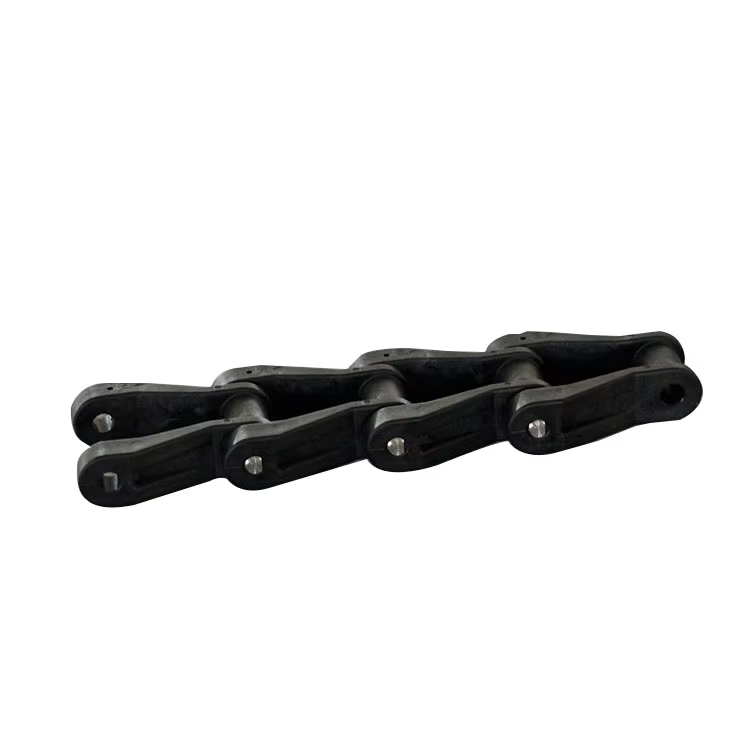
The plant converted to a plastic scraper system from Huake Rubber & Plastic, specifying glass-reinforced polypropylene chain and scraper components. Installation weight was 60 percent less than the metal system. After 48 months of continuous operation, inspection showed surface wear of less than 2 millimeters, no corrosion of any component, and zero unscheduled maintenance. Projected service life is 10 years at 40 percent less replacement cost than stainless steel.
Selection and Maintenance Considerations
Temperature and Chemical Limits
Polypropylene scrapers are rated for continuous service up to 80°C to 90°C, while polyethylene has a lower limit of approximately 70°C. Industrial wastewater above these thresholds requires metal or specialty fluoropolymer components. Chemical compatibility should be verified against specific effluent — organic solvents in pharmaceutical wastewater attack polypropylene, requiring acetal or PVDF alternatives.
Installation and Sizing
A plastic scraper system for a 30-meter sedimentation tank weighs approximately 1,200 kilograms versus 3,500 kilograms for stainless steel. The weight reduction simplifies installation and reduces heavy lifting equipment needs. Drive power requirements drop correspondingly — a 2-horsepower motor on plastic handles the same tank as a 3-horsepower motor required for metal.
Frequently Asked Questions
How long does a plastic scraper last compared to metal in sewage treatment?
A plastic scraper system typically operates 8 to 12 years in municipal wastewater applications, comparable to 10 to 15 years for stainless steel. Plastic fails gradually while metal may fail through sudden corrosion cracking. Total cost of ownership is generally lower due to reduced maintenance.
What chemical conditions cause plastic scrapers to fail?
Concentrated organic solvents, strong oxidizing acids above 20 percent, or continuous temperatures exceeding 80°C. Standard polypropylene scrapers from manufacturers like Huake hold up well across typical municipal and industrial wastewater profiles.
Can plastic scrapers handle abrasive grit and sand in wastewater?
Yes — plastic scraper materials wear predictably under abrasive conditions and are less prone to localized gouging. Glass reinforcement provides abrasion resistance comparable to medium-carbon steel.
Do plastic scrapers require different drive motors than metal?
Plastic scraper systems weigh 40 to 60 percent less, requiring smaller drive motors and lighter supports. A typical plastic system reduces drive power by 30 to 40 percent compared to a metal system for the same tank.
How does plastic scraper weight affect tank structural requirements?
Lower weight reduces design loads on tank walls and support beams, simplifying retrofits in existing structures where metal system weight would require structural reinforcement.
Are plastic scrapers repairable or do they require full replacement?
Individual chain links, scraper blades, and wear shoes can be replaced without removing the entire system. Huake Rubber & Plastic’s modular design allows targeted replacement, reducing downtime compared to metal systems requiring complete sub-assembly replacement.