 EN
EN

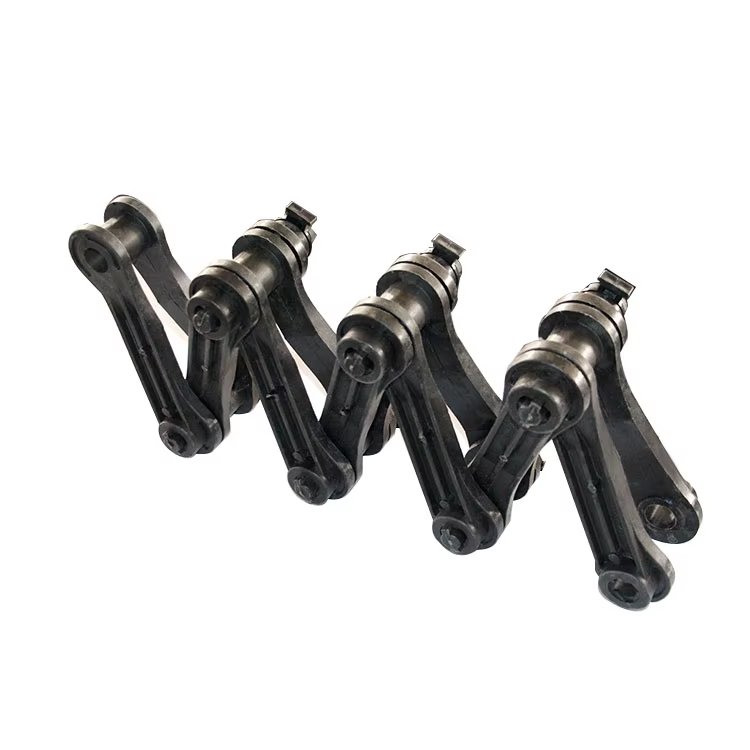
The Weight-Efficiency Connection in Sludge Handling
Sedimentation tank scraper systems operate continuously, moving settled solids across tank floors to collection hoppers. The drive motor runs against the combined resistance of scraper assembly weight, water drag, and collected sludge load. Reducing scraper assembly weight by 40 to 60 percent through plastic scraper construction seems a straightforward path to reduced energy consumption and longer motor life. The reality involves more variables than simple mass reduction.
How Scraper Weight Translates to Motor Load
The drive motor in a chain-type scraper system must overcome three forces. Static weight of the scraper assembly itself creates friction at every bearing surface and chain guide. Hydrodynamic drag — resistance of moving components through water — scales with cross-sectional area and chain speed. The variable load of collected sludge accumulates over the scraper cycle and releases at the discharge point.
A plastic scraper reduces the static weight component by 40 to 60 percent compared to metal. However, if static weight represents only 30 to 40 percent of total motor load — with drag and sludge accounting for the remainder — the weight reduction translates to only a 12 to 16 percent reduction in total motor load. The proportion matters more than the percentage.
Motor Service Life Factors Beyond Load
Electric motor service life depends on winding temperature, bearing load, and start-stop cycles. Winding insulation follows the Arrhenius relationship — every 10°C reduction in operating temperature approximately doubles insulation life. If a plastic scraper's weight reduction enables the motor to operate 5°C to 8°C cooler, insulation life extends 40 to 70 percent — but only if the motor was previously near its thermal limit.
Bearing life follows the inverse cube of load. A 15 percent reduction in motor bearing load extends bearing life by approximately 60 percent. This is where plastic scraper weight reduction provides its strongest argument for motor service life extension.
Energy Consumption Reduction
A reduction of 12 to 20 percent in motor operating current over 8,760 hours of continuous annual operation translates to measurable savings. A 3-horsepower motor reduced from 80 to 65 percent load saves approximately 290 annually. Over 10 years, energy savings approach 2,900 — modest compared to system cost, but real when combined with extended bearing life.
A Practical Case: Municipal Treatment Plant Scraper Replacement
A UK municipal wastewater plant operated four 30-meter sedimentation tanks with stainless steel chain-type scraper systems. Drive motors — 3-horsepower units — had been replaced twice in 15 years, with average life of 7.5 years versus an expected 12 to 15 years.
The plant replaced two of four systems with plastic scraper assemblies from Huake Rubber & Plastic, reducing assembly weight by 52 percent. Motor current measurements showed a 16 percent reduction on the converted tanks. Over five years, motors on plastic scraper tanks operated without failure. Motors on remaining metal tanks experienced one bearing failure at year three. The plant is budgeting to convert the remaining tanks.
Evaluating Weight Reduction Claims
When a supplier claims a plastic scraper extends motor life, request the specific calculation linking weight reduction to total motor load and bearing life. A 40 percent lighter component that reduces total load by 12 percent extends bearing life by approximately 47 percent — valuable but not proportional. The value proposition should be calculated from total load reduction, not assembly weight reduction alone.
Frequently Asked Questions
How much does a plastic scraper actually reduce total motor load?
A 40 to 60 percent reduction in assembly weight typically reduces total motor load by 12 to 20 percent because hydrodynamic drag and sludge load remain unchanged regardless of material.
Does reduced motor load guarantee extended motor life?
Winding life doubles per 10°C reduction. Bearing life extends with the cube of reduced load. Both improvements require the motor to have been previously operating near its thermal limits.
What are the energy savings from switching to plastic scrapers?
A 3-horsepower motor operating continuously saves approximately $290 annually with a 16 percent load reduction. Over 10 years, combined energy and bearing life savings contribute meaningfully to total cost of ownership.
Can a plastic scraper handle the same sludge loads as metal?
Plastic scraper systems handle equivalent sludge loads to metal systems in municipal wastewater applications. Material wear rates differ significantly — plastic wears at a predictable, gradual rate while metal may fail through sudden corrosion cracking without visible warning. Huake Rubber & Plastic manufactures plastic scraper systems rated for equivalent throughput in primary and secondary sedimentation applications.
What is the weight difference between plastic and metal scrapers?
Plastic scraper assemblies typically weigh 40 to 60 percent less than equivalent stainless steel assemblies. A 30-meter sedimentation tank system weighs approximately 1,200 kilograms in plastic versus 3,500 kilograms in stainless steel. The weight reduction translates directly to reduced structural loading on the tank walls and support beams.
Does plastic scraper weight reduction affect tank structural loading?
Lower weight reduces design loads on tank walls and support beams, simplifying retrofits in existing structures. This structural advantage is often more significant than motor life extension in older treatment plants where the weight of a metal scraper system would require costly structural reinforcement before installation.