 EN
EN

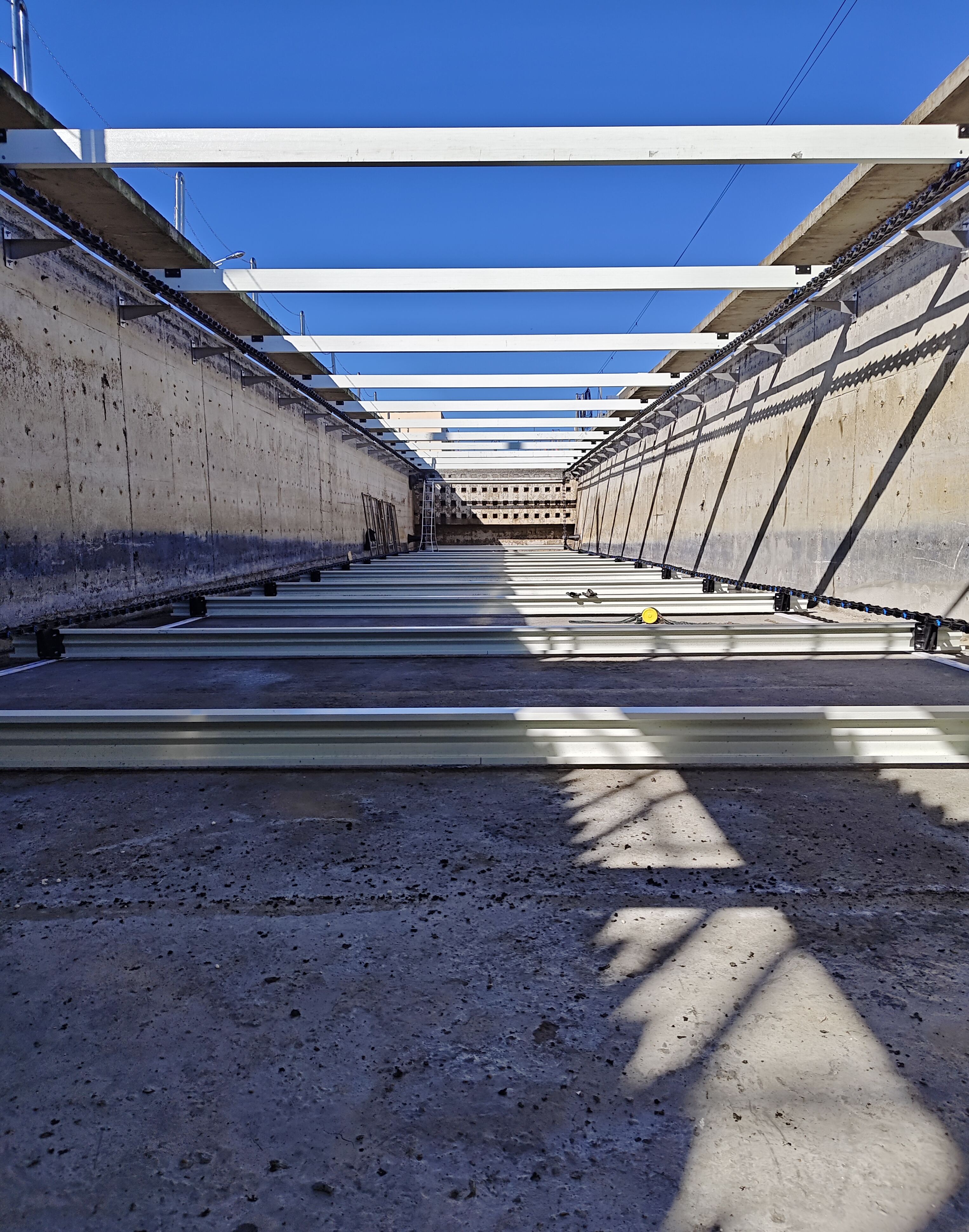
Material Advantages: Why Plastic Scrapers Resist Wear and Corrosion
HDPE, PU, PA, and POM â Superior Chemical Resistance and Mechanical Toughness vs. Metal
Polymers like HDPE, PU, PA, and POM stand out for their remarkable ability to resist chemicals in harsh sewage conditions. The reason? Their molecular makeup is basically non-porous, so stuff like hydrogen sulfide, chlorides, and those pesky organic acids can't get through them. Metals tell a different story altogether, constantly battling issues like galvanic and pitting corrosion. What makes these thermoplastics really useful is how they handle both impact and maintain their shape over time. They stick around even after bouncing off clarifier tank walls again and again without warping or bending. Lab tests show these materials keep about 90% of their tensile strength after spending roughly 10,000 hours in super acidic or alkaline solutions. That's actually four times better than what we see from metals coated with epoxy. And because they don't break down electrolytically like metals do, they last much longer in service.
Wear Rate Comparison: Plastic vs. Stainless Steel Flights in Continuous Clarifier Operation
Stainless steel flights in actual municipal clarifiers tend to wear down around 0.5 to 1.2 mm each year because of those pesky abrasive solids and all that pitting caused by microbes. But when we look at UHMWPE and reinforced PU plastic flights, they only lose less than 0.05 mm per year under the same conditions, which is basically twenty times better. The reason for this big difference lies in the natural properties of these polymer materials. They have built-in lubricity and can bounce back after being compressed, so instead of wearing away like metal does, they actually absorb the friction energy. Practical results show plastic scraper systems last between five to seven years before needing replacement, while their metal counterparts typically need replacing every eighteen to twenty-four months. According to recent wastewater industry standards from 2024, this translates into about a two-thirds drop in replacement expenses over ten years of operation.
Design-Driven Reliability: Lubrication-Free Operation and Reduced Mechanical Stress
Lightweight Plastic Construction Extends Drive System Life and Minimizes Alignment Drift
Plastic scraper systems engineered for industrial use typically weigh between 60 and 70 percent less than their metal counterparts. This significant weight difference makes a big difference when it comes to operation. The reduced mass means less force is needed when starting up, stopping, or changing direction. According to various mechanical tests, this cuts down stress on drive components by around 45%. With lighter operational loads, there's simply less risk of overloading bearings and causing shaft misalignment problems that plague metal systems so often. Most conventional scrapers need regular realignment checks every three months or so, but plastic versions tend to stay put much better, maintaining their position for about a year and a half without issues. Plus, these plastic systems have built-in damping characteristics that help prevent those annoying bolt loosening problems and gradual structural shifts that are all too common with rigid steel setups.
Integrated Chain-and-Flight Systems Eliminate Routine Lubrication and Tension Adjustments
The latest plastic scrapers feature co-molded chain and flight assemblies that act as one unit for distributing loads. These designs eliminate those pesky metal-on-metal contacts that always needed greasing. According to field reports from twelve different city facilities, workers spend about 87 percent fewer hours dealing with lubrication issues compared to older systems. Traditional metal chains expand when heated and need adjusting throughout the seasons. But these polymer-based components have a stable elasticity that keeps proper tension all on its own. As a result, maintenance intervals stretch out dramatically from around 300 hours to well over 1,200 hours of operation before needing attention again.
Proven Field Performance: Long Service Life and Minimal Intervention in Real Wastewater Plants
5-Year Zero-Failure Data: PU Plastic Scraper Systems in Singapore PUB Primary Clarifiers
The PU plastic scraper systems put into place at Singapore PUB's primary clarifiers ran problem-free for an impressive five years straight, something that stands out when compared to metal versions which needed parts replaced every three months or so. Maintenance time went down around 62% each year, saving about $18k per unit over their lifetime according to the Singapore PUB report from last year. When faced with tough biosolid conditions, these polymer chains kept bending back and forth without any cracks forming or joints coming apart, something that regularly happens with those stiff metal connections we've all seen break down so often.
Operational Uptime Metrics: Plastic Scraper vs. Traditional Metal Systems Across 12 Municipal Plants
A 2024 multi-site analysis across 12 municipal wastewater plants found plastic scrapers delivered 98.7% average operational uptime, significantly outperforming stainless steel systems at 89.1%. Key outcomes included:
- Chain failures: 5.3 times more frequent in metal systems
- Lubrication halts: 87% reduction in manual lubrication tasks with plastic
- Sludge-throughput efficiency: No measurable decline after 40,000 operating hours
These results confirm that plastic scraper designs substantially reduce unplanned downtime. Plants saved an average of 240 labor hours annually through fewer interventions and extended component lifecycles.
FAQ
What are the benefits of using plastic scrapers in wastewater treatment?
Plastic scrapers like those made from HDPE, PU, PA, and POM offer superior resistance to chemicals and abrasives while maintaining structural integrity over time. They also require less maintenance and result in cost savings compared to traditional metal scrapers.
How do plastic scrapers compare to metal scrapers in terms of wear and longevity?
Plastic scrapers demonstrate a significantly lower wear rate and longer service life than metal scrapers. For instance, they can function effectively for five to seven years before needing replacement, whereas metal scrapers may require replacing every 18 to 24 months.
Are plastic scraper systems cost-effective in the long run?
Yes, plastic scraper systems reduce maintenance costs and downtime, resulting in a two-thirds drop in replacement expenses over a ten-year period compared to metal systems. The extended lifespan and reduced maintenance needs contribute to overall cost-effectiveness.
Do plastic scrapers require regular lubrication and tension adjustments?
Plastic scraper systems generally feature integrated designs that eliminate the need for regular lubrication and tension adjustments, significantly reducing maintenance time and labor costs compared to traditional metal systems.