 EN
EN

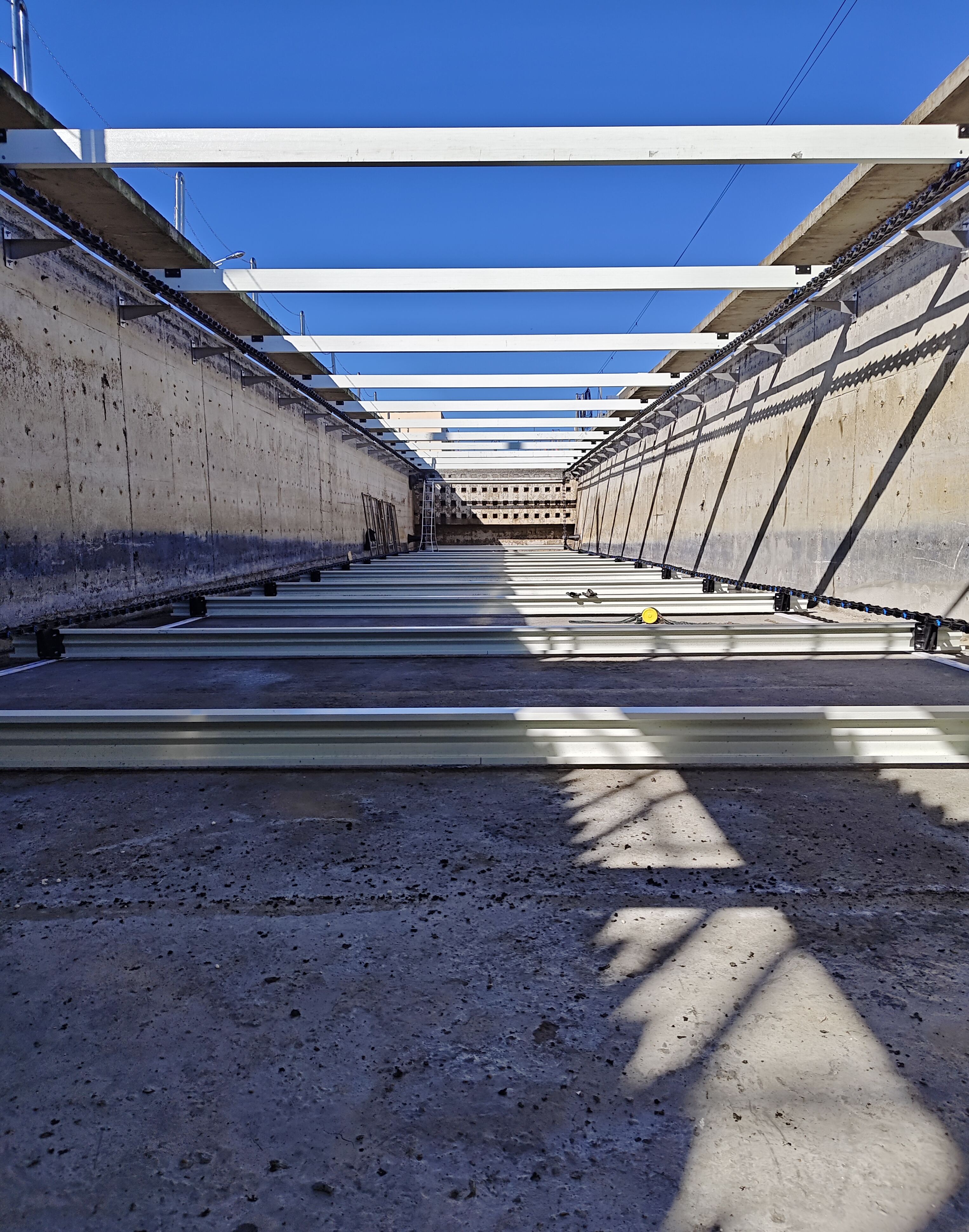
Superior Corrosion Resistance of Plastic Scrapers in Harsh Wastewater Environments
Wastewater treatment plants demand materials that withstand corrosive sludge, hydrogen sulfide, and fluctuating pH levels. Plastic scrapers have emerged as the preferred choice due to their unparalleled resistance to chemical and biological degradation compared to traditional metal alternatives.
The Problem with Metal Scrapers: High Corrosion Rates in Sewage Treatment
Stainless steel scrapers used in primary clarifiers typically wear down between half a millimeter to over a millimeter each year because of sulfuric acid produced during anaerobic digestion processes. Research published in 2020 looked at how long different materials last before needing replacement. The findings showed that in wastewater treatment plants handling more than 10 million gallons per day, steel parts need replacing roughly every 18 to 24 months. This adds up to maintenance expenses ranging from $28,000 to $42,000 per year for many facilities. Another problem comes from chloride-induced stress corrosion cracking which weakens the metal over time. When this happens, there's a much higher chance of equipment failures right when the system is under maximum load during peak flows.
How Plastic Materials Resist Chemical and Biological Degradation
Modern plastic scrapers made from UHMWPE (Ultra-High Molecular Weight Polyethylene) and polyurethane achieve 98% corrosion resistance through three mechanisms:
- Molecular density: Non-porous structures (0.94–0.98 g/cm³ density) prevent microbial adhesion
- Chemical inertness: Stable polymer chains resist oxidation from chlorine (<500 ppm) and sulfuric acid (pH <1)
- Galvanic immunity: Unlike metals, plastics don't enable electrochemical corrosion pathways
A recent materials analysis demonstrated these polymers retain 89% tensile strength after 10,000 hours in pH 2–12 environments, outperforming epoxy-coated metals by 4:1.
Case Study: 5-Year Performance Comparison of Stainless Steel vs. Polyurethane Scrapers
A Midwestern wastewater plant recorded maintenance data for parallel primary clarifiers:
| Metric | Stainless Steel Scraper | Polyurethane Scraper |
|---|---|---|
| Annual corrosion loss | 0.8 mm | 0.02 mm |
| Blade replacements | 3 | 0 |
| Downtime hours | 144 | 12 |
| Total 5-year cost | $191k | $63k |
The plastic system's 67% cost advantage aligns with findings from the Water Environment Federation, showing polymer-based equipment reduces lifecycle expenses by 40–60% in corrosive applications.
Enhanced Operational Efficiency with Plastic Chain and Rotary Scraper Systems
Low-Friction Properties of Plastic Improve Scraper Mechanism Reliability
The natural slipperiness of plastic parts helps cut down on wear and tear in chain driven systems, so sludge keeps moving smoothly even when there are lots of solids present. Metal options need constant greasing, but polymer scrapers made from materials like HDPE or High Density Polyethylene just keep working without all that hassle. Some tests at wastewater plants have found these plastic components actually use around 40 percent less power than their metal counterparts. And because they last longer between breakdowns, maintenance crews can go two to three years before needing replacements in most clarifier setups. That kind of longevity really adds up over time for plant operators looking to reduce downtime and repair costs.
Energy and Maintenance Savings Using HDPE Blades in Rotary Scrapers
Rotary scrapers with HDPE blades achieve 15–20% energy savings compared to stainless steel, per a 2024 analysis of 12 municipal plants. The material’s lightweight nature reduces torque requirements, while its resistance to biofouling cuts blade cleaning frequency by 50%. Operators report annual maintenance cost reductions of $18,000–$24,000 per unit after switching to plastic.
Design Trends: Modular and Self-Cleaning Plastic Scraper Arrays
Modern systems feature snap-together plastic modules that adapt to tank geometries with ±5 mm precision. Self-cleaning designs use angled blade profiles to shed debris automatically, improving operational uptime by 30% in plants handling over 10,000 m³/day.
Optimizing Scraper Speed and Blade Geometry Through Simulation Models
Advanced finite element analysis (FEA) now tailors plastic scraper geometries to site-specific conditions. A 2023 Material Innovation Report demonstrated how simulated wear patterns reduced blade replacement costs by 65% in abrasive sludge environments. Variable-speed drives coupled with these models achieve optimal scraping efficiency at 85% lower energy draw than fixed-speed systems.
Reduced Maintenance and Downtime with Plastic Scraper Technology
Common Maintenance Challenges with Traditional Screening Equipment
Metal scraper systems in wastewater treatment require frequent servicing due to corrosion (average repair costs of $7,500/year per unit according to Water Environment Federation 2023 data). Operators face three persistent issues:
- Material fatigue from constant abrasive contact with grit and sludge
- Biological growth accelerating corrosion in submerged components
- Misalignment issues causing uneven blade wear
These challenges typically lead to 12–18 annual service interventions per scraper mechanism, disrupting treatment processes.
How Plastic Components Minimize Service Frequency and Repair Costs
High-performance polymers like UHMWPE and reinforced polypropylene resist biofilm adhesion and chemical attack, key durability factors confirmed in recent material studies. Compared to stainless steel, plastic scrapers demonstrate:
| Metric | Metal Scrapers | Plastic Scrapers |
|---|---|---|
| Annual corrosion rate | 0.5–1.2 mm/yr | <0.05 mm/yr |
| Lubrication intervals | 50 hours | 800+ hours |
| Part replacement cycle | 18–24 months | 5–7 years |
This material durability translates to 60% fewer scheduled maintenance events and 45% lower annual repair costs across typical installations.
Case Study: 40% Reduction in Annual Maintenance Hours After Switching to Plastic Scrapers
A midwestern U.S. treatment plant documented 1,247 maintenance hours on metal scrapers in 2021 versus 721 hours after upgrading to modular plastic systems in 2023. The redesign eliminated 92% of corrosion-related work orders while maintaining identical flow rates (12 MGD average).
Innovative Design Flexibility for Improved Sludge Removal and Solid-Liquid Separation
Limitations of Conventional Sludge Scraper Mechanisms in Clarifiers
Traditional metal scrapers often struggle with clarifiers’ variable geometries, leading to incomplete sludge removal. Rigid steel blades cannot conform to settling tank floor irregularities, leaving residual solids that reduce treatment efficiency by 15–20% compared to adaptive systems (Water Infrastructure Journal 2023).
Advantages of Flexible, Rigid Plastic Blade Designs for Efficient Scraping
Engineered plastics like polypropylene and HDPE enable unique dual-material designs – flexible edges conform to surface imperfections while reinforced cores maintain structural integrity. This innovation reduces uneven wear patterns by 38% compared to single-material metal scrapers (Wastewater Tech Review 2024).
Case Study: Custom-Molded Plastic Scrapers Boost Removal Efficiency by 30%
A 50 MGD treatment plant achieved dramatic improvements after implementing modular plastic scrapers with 3D-printed blade profiles. The custom components addressed historical dead zones in their rectangular clarifiers, cutting annual maintenance costs by $62,000 while improving solids capture consistency.
Emerging Trend: Automated Plastic Scraper Systems in Large-Scale Treatment Plants
Leading facilities now integrate self-diagnosing plastic scraper arrays with IoT-enabled load sensors. These systems automatically adjust torque output based on real-time sludge density readings, reducing energy waste during low-load periods by up to 40% compared to fixed-speed models.
Economic and Long-Term Benefits of Transitioning to Plastic Scrapers
Cost-Benefit Analysis: Plastic vs. Metal Scrapers Over a 10-Year Lifecycle
Looking at what happens over about ten years shows that plastic scrapers actually cost around 34 percent less overall compared to their metal counterparts. Stainless steel tends to corrode pretty badly and needs replacing every other year at roughly $740k according to Ponemon's findings from last year. Polyurethane options stay strong without needing much attention beyond yearly checks. According to the latest Materials Innovation Report released in 2023, these kinds of polymer systems can cut down on how often parts need replacing by nearly two thirds when used in wastewater treatment settings. Take one particular sand processing facility for instance they managed to slash maintenance expenses by approximately 18% once they switched over to those modular plastic blade setups, something highlighted in recent equipment lifecycle studies across the industry.
Sustainability Advantages: Reduced Waste and Energy Use with Durable Plastics
Plastic scrapers consume 60% less energy during production than metal equivalents (EPA 2022) and generate 83% less waste over their operational lifespan. Advanced HDPE formulations now incorporate 30–40% recycled content without compromising tear resistance, addressing circular economy demands. In contrast, metal scrapers contribute to 450 tons/year of ferrous waste per medium-sized treatment facility.
Strategic Material Selection for Future-Proofing Wastewater Infrastructure
Plants that want to stay ahead of the curve are increasingly turning to plastic scraper systems because they work well across a wide pH spectrum from around 2.5 up to 12, which covers most real world conditions. The blades can be shaped differently depending on what's needed, and these systems use special mixtures of polymers that make them compatible with about 9 out of 10 existing clarifier setups while still passing those important NSF/ANSI 61 tests. What makes this really valuable is that facilities don't have to tear everything apart just to install smart scraper controls powered by artificial intelligence. Most upgrades can happen alongside regular maintenance cycles rather than requiring expensive rebuilds from scratch.
FAQ
What materials are used in plastic scrapers for wastewater treatment?
Plastic scrapers are typically made from UHMWPE (Ultra-High Molecular Weight Polyethylene) and polyurethane.
How do plastic scrapers compare to metal scrapers in terms of corrosion resistance?
Plastic scrapers have significantly higher corrosion resistance compared to metal scrapers, enduring harsh environments and chemicals typically found in wastewater treatment plants.
What cost advantages do plastic scrapers offer over metal alternatives?
Plastic scrapers provide a 67% cost advantage over five years due to reduced maintenance needs and material durability.
Do plastic scrapers require special installation?
Plastic scraper systems are designed to integrate with existing setups and usually do not require major overhauls or special installations.
What are the sustainability benefits of using plastic scrapers?
Plastic scrapers consume less energy during production, produce less waste, and can incorporate recycled materials, making them a more sustainable choice than metal scrapers.
Table of Contents
- Superior Corrosion Resistance of Plastic Scrapers in Harsh Wastewater Environments
- Enhanced Operational Efficiency with Plastic Chain and Rotary Scraper Systems
- Reduced Maintenance and Downtime with Plastic Scraper Technology
- Common Maintenance Challenges with Traditional Screening Equipment
- How Plastic Components Minimize Service Frequency and Repair Costs
- Case Study: 40% Reduction in Annual Maintenance Hours After Switching to Plastic Scrapers
- Innovative Design Flexibility for Improved Sludge Removal and Solid-Liquid Separation
- Economic and Long-Term Benefits of Transitioning to Plastic Scrapers
-
FAQ
- What materials are used in plastic scrapers for wastewater treatment?
- How do plastic scrapers compare to metal scrapers in terms of corrosion resistance?
- What cost advantages do plastic scrapers offer over metal alternatives?
- Do plastic scrapers require special installation?
- What are the sustainability benefits of using plastic scrapers?