 EN
EN

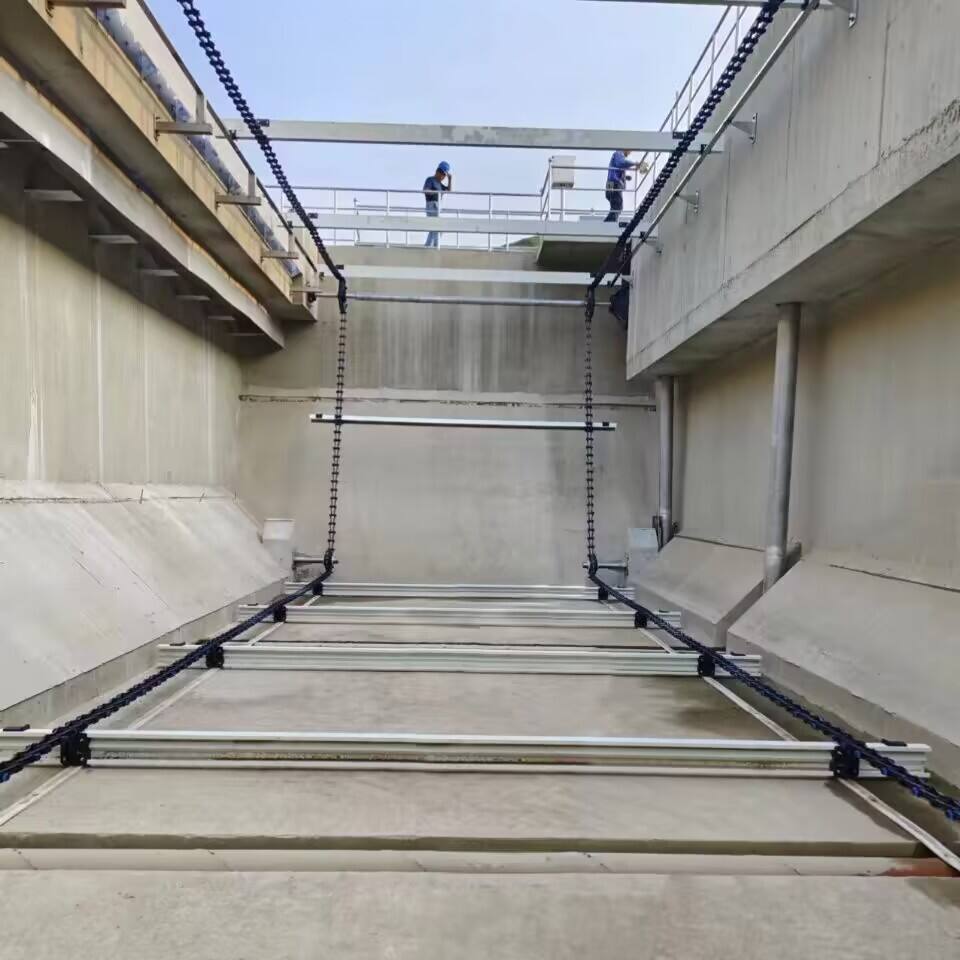
Why Scraper Systems Corrode in Standard Wastewater
A scraper system in a municipal wastewater plant operates in what appears to be standard sewage — yet metal components corrode at three times the rate seen at a neighboring facility. The difference is invisible: hydrogen sulfide (H₂S) concentration, pH fluctuation, and chloride levels drive the accelerated corrosion. Wastewater is never "standard" — it varies by upstream industrial contributors, temperature, and detention time, all affecting the chemistry attacking the scraper.
Hydrogen Sulfide, Sulfuric Acid, and the Corrosion Mechanism
The primary corrosion mechanism in a wastewater scraper system begins with H₂S gas formed when sulfate-reducing bacteria convert sulfates into sulfide in oxygen-depleted zones. The gas escapes into the headspace above the scraper — where metal drive chains, sprockets, and structural components operate. Thiobacillus bacteria colonize these surfaces and oxidize H₂S into sulfuric acid, which attacks carbon steel at 0.5 mm to 2 mm per year. A 6 mm chain link in a high-H₂S environment can lose structural integrity within 3 to 5 years — well below the 15-year design life of the sedimentation tank.
Real-World Case — A Municipal Plant Diagnoses Premature Corrosion
A Southeast Asian municipal wastewater treatment plant experienced repeated chain drive failures on its primary sedimentation tank scraper system — chain link fractures occurring at approximately 4 years of service versus the expected 12 to 15 years. Water chemistry analysis revealed two contributing factors: hydrogen sulfide concentrations averaging 15 ppm in the tank headspace — three times the typical municipal level — and chloride levels elevated by upstream textile dyeing industry discharge. The H₂S was producing sulfuric acid attack on the carbon steel chain surface; the chlorides were penetrating the passive oxide layer on the stainless steel pins, causing pitting corrosion precisely at the chain joints where mechanical stress was highest. Hengshui Huake Rubber & Plastic, with 18 years of non-metallic scraper system expertise and ISO 9001-certified production, recommended replacing the metal chain and sprockets with a high-strength engineering plastic system. The non-metallic chain is inherently immune to both acid attack and chloride pitting — corrosion mechanisms that simply do not apply to polymer materials. After three years of continuous operation, the replacement chain shows zero measurable corrosion, and the plant extended the non-metallic specification to its three remaining sedimentation tanks.
Metal vs. Non-Metallic Scraper Systems
Corrosion Resistance, Weight, and Lifecycle Cost
A metal scraper system — carbon steel with coating or 304/316 stainless — provides high tensile strength but is fundamentally vulnerable to the wastewater environment. Coatings degrade at wear points; stainless steel resists uniform corrosion but succumbs to chloride pitting at joints. Non-metallic systems — engineering plastics (UHMWPE, nylon, polyacetal) and composites — are inherently immune to electrochemical corrosion. Tensile strength is lower, requiring larger cross-sections, but weight reduction of 40% to 60% reduces drive motor requirements and simplifies installation. Lifecycle cost analysis consistently favors non-metallic when the corrosion environment is moderate to severe.
Factors That Accelerate Scraper System Corrosion
pH, Chloride Concentration, Temperature, and Abrasion
Four factors accelerate scraper system corrosion. Low pH — wastewater below 6.0 from industrial acid discharge — directly attacks metal surfaces. High chloride — above 500 mg/L from industrial discharge or seawater intrusion — drives pitting. Elevated temperature — every 10°C increase roughly doubles the reaction rate. Abrasive wear — grit and sand erode coatings, exposing bare metal at stress points.
Material Selection for Corrosion-Resistant Scraper Systems
Five Material Properties That Determine Service Life
First, chemical resistance — the material must withstand continuous immersion in the specific wastewater chemistry. Second, water absorption — UHMWPE absorbs under 0.01% versus materials that swell and lose stability. Third, tensile strength at operating temperature to support scraper flight loads. Fourth, abrasion resistance against grit-laden sludge. Fifth, resistance to the H₂S/sulfuric acid vapor environment above the waterline. HSHuake's non-metallic scraper system solutions are engineered from high-strength composites selected for these five performance requirements in wastewater service.
Frequently Asked Questions
Why does a scraper system corrode faster than expected?
A scraper system corrodes faster than expected due to elevated hydrogen sulfide forming sulfuric acid on metal surfaces, high chloride concentrations causing pitting corrosion, low pH from industrial discharge, and abrasive grit eroding protective coatings at stress points. HSHuake provides non-metallic scraper systems inherently immune to these electrochemical corrosion mechanisms.
What is the difference between metal and non-metallic scraper systems?
Metal scraper system components are vulnerable to acid attack and chloride pitting. Non-metallic systems — engineering plastics and composites — are corrosion-resistant, 40% to 60% lighter, and offer longer service life in moderate to severe wastewater.
How does hydrogen sulfide cause scraper corrosion?
H₂S gas escapes from wastewater into the headspace above the scraper system. Bacteria oxidize it into sulfuric acid, attacking carbon steel at up to 2 mm per year. A 6 mm chain link can fail within 3 to 5 years.
What wastewater conditions accelerate scraper corrosion?
pH below 6.0, chloride above 500 mg/L, temperature above 25°C, and abrasive grit all accelerate scraper system corrosion. Each 10°C temperature increase roughly doubles the rate in aggressive chemistry.
How long should a non-metallic scraper system last?
A non-metallic scraper system using engineering plastics like UHMWPE achieves 15 to 20 years in municipal wastewater — three times or more longer than coated carbon steel in the same environment.
Can an existing metal scraper be converted to non-metallic?
Yes, an existing scraper system can be retrofitted with non-metallic chain, sprockets, and flights during scheduled maintenance, reusing the existing drive motor and tank structure while replacing only corrosion-vulnerable components.