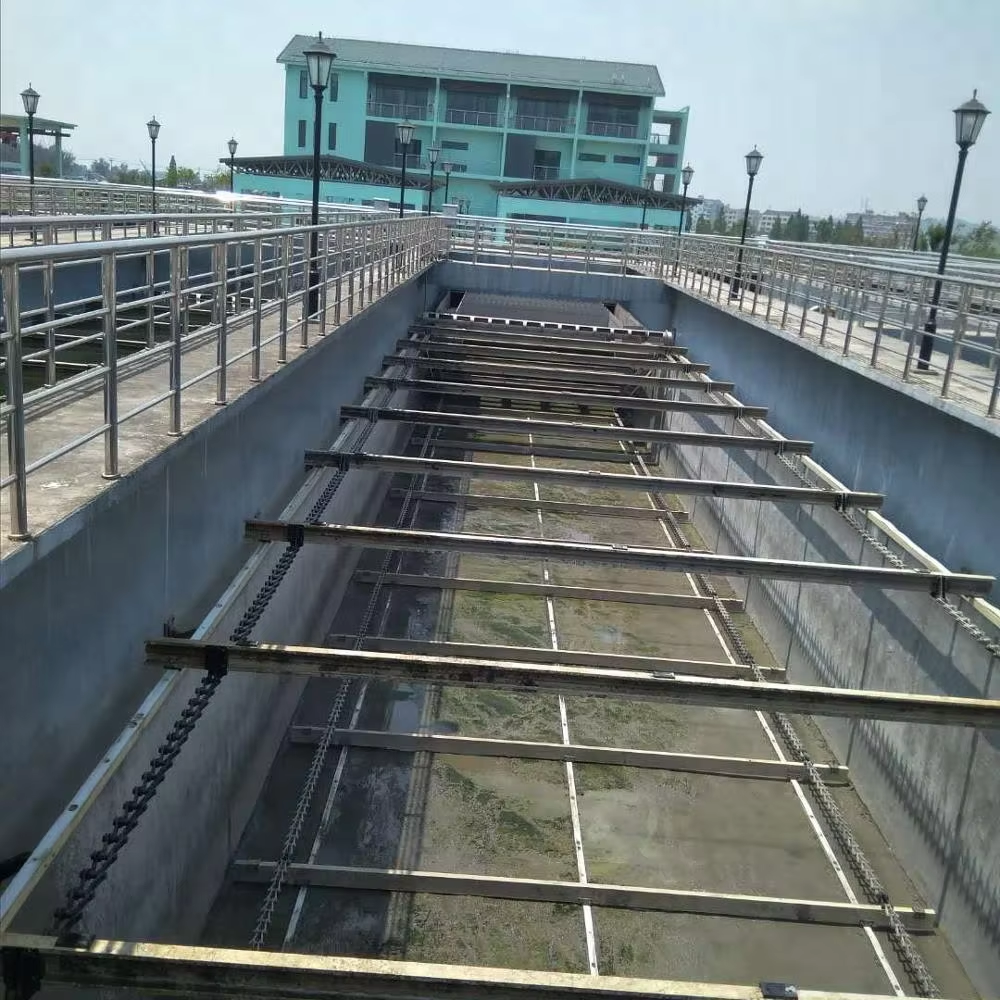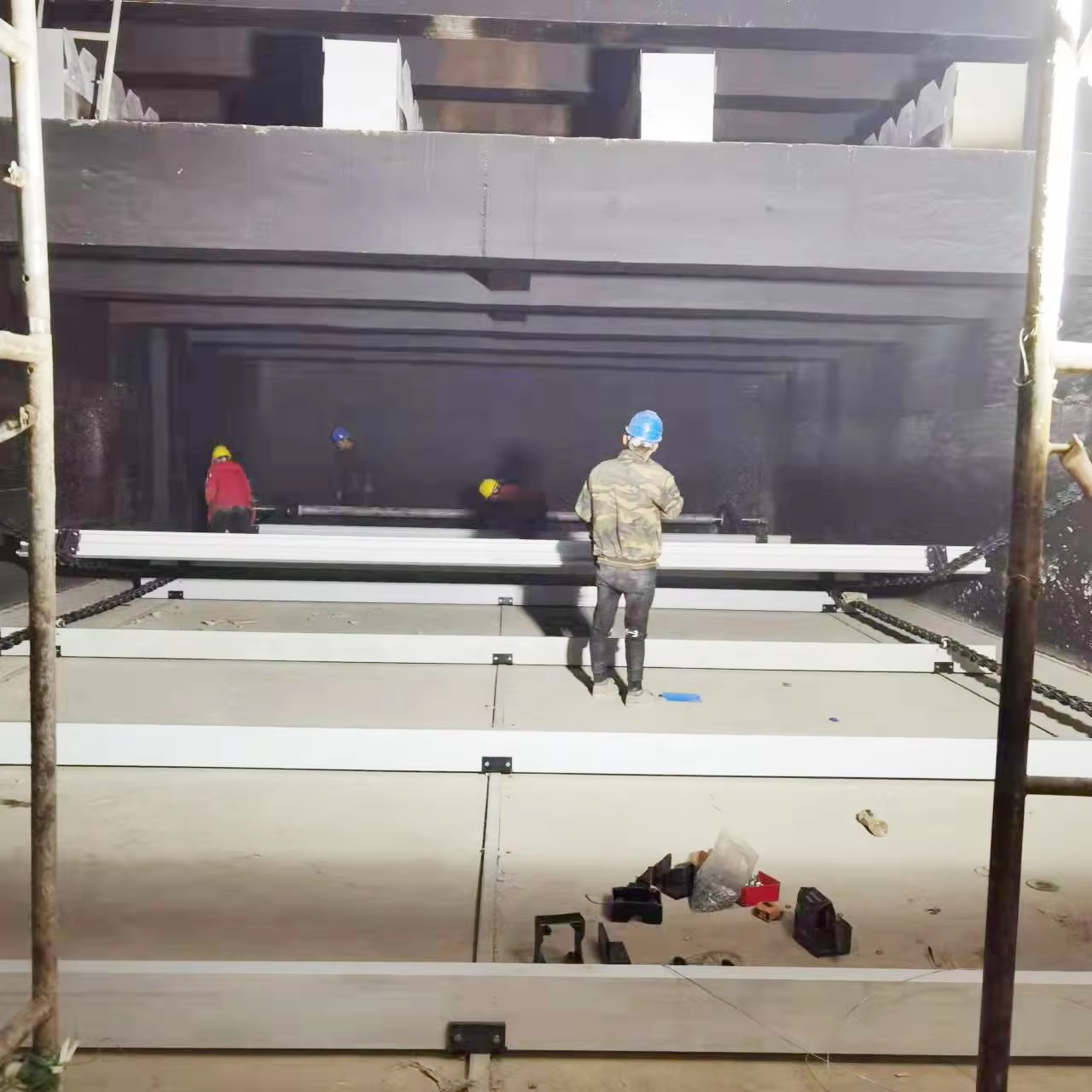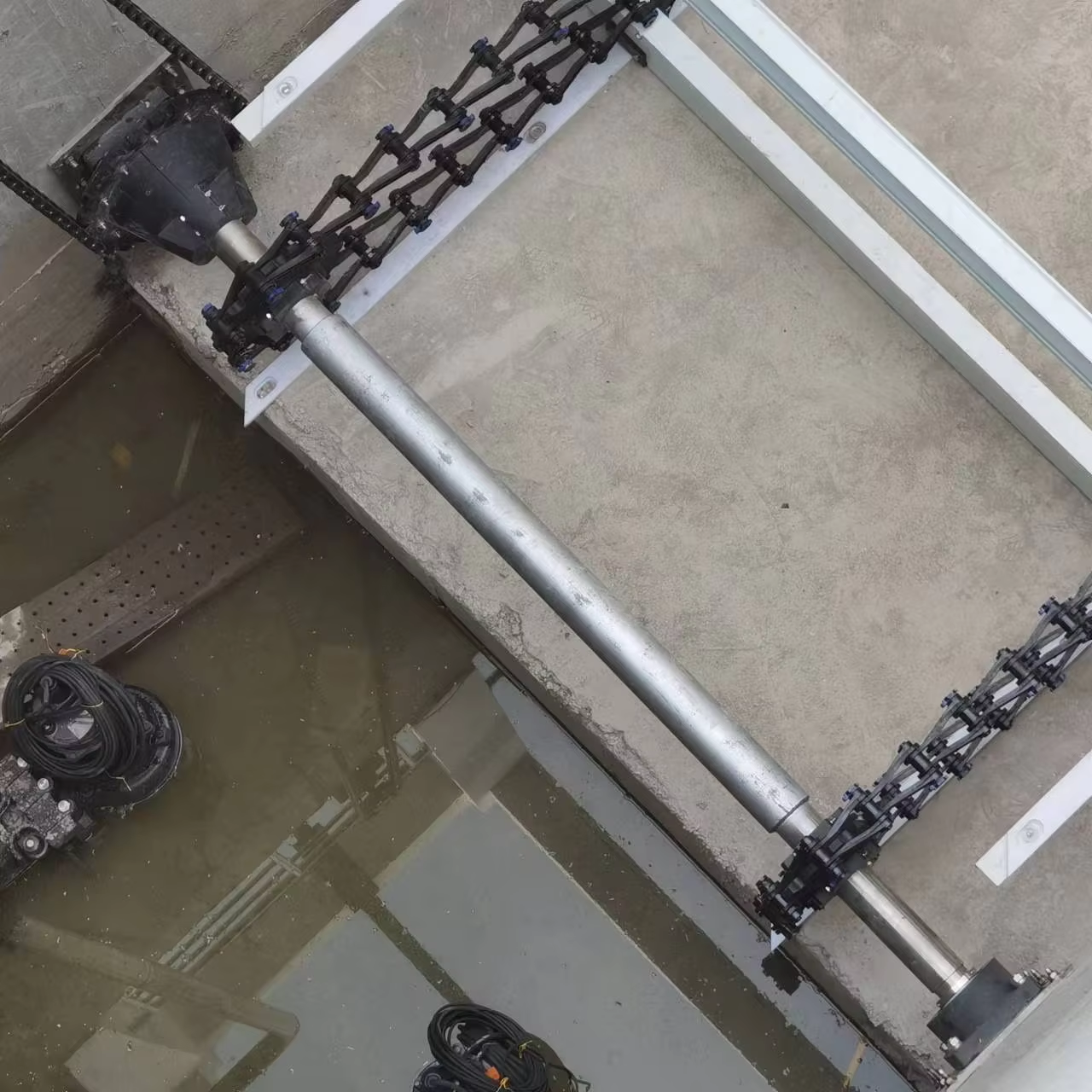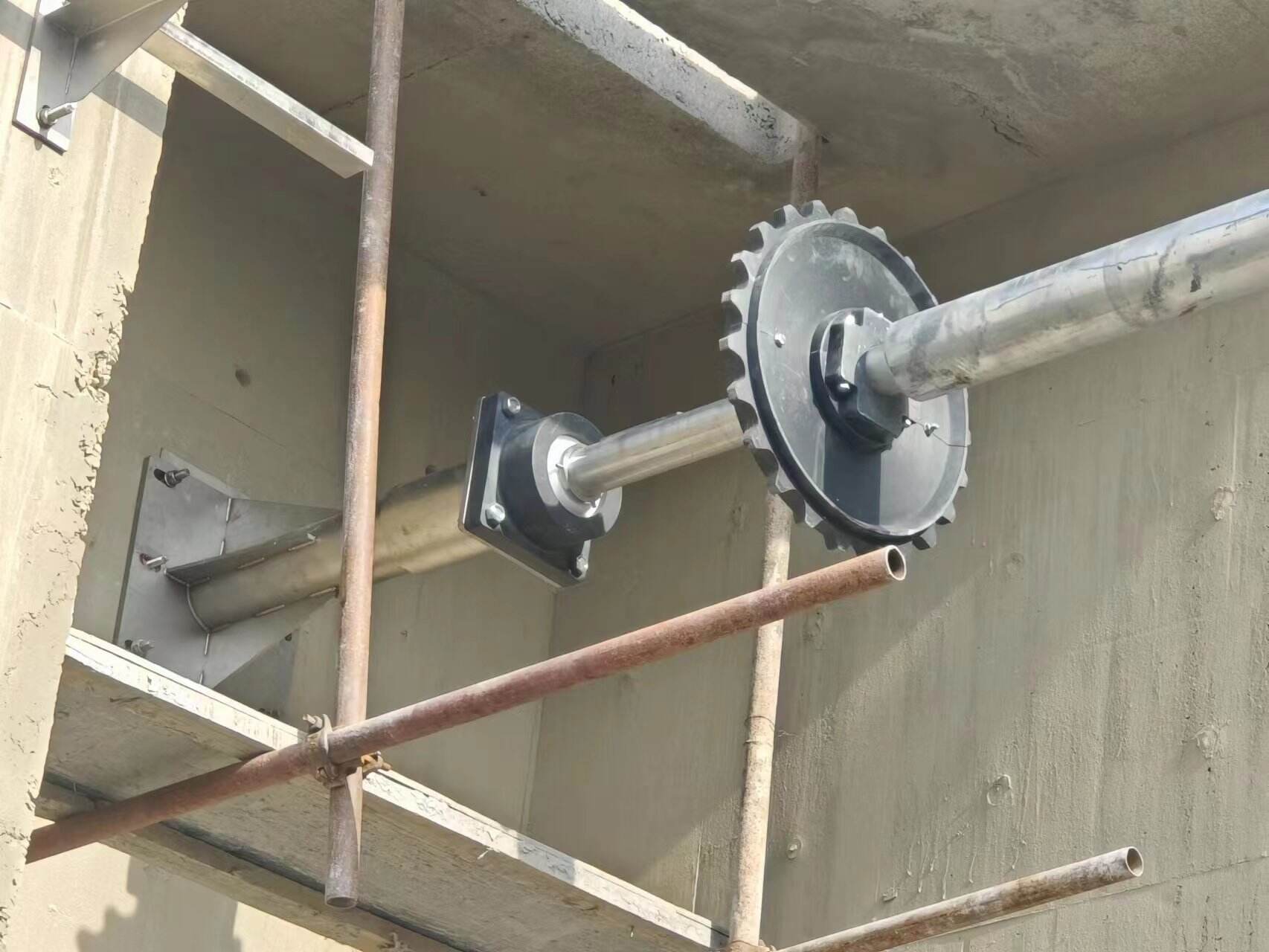
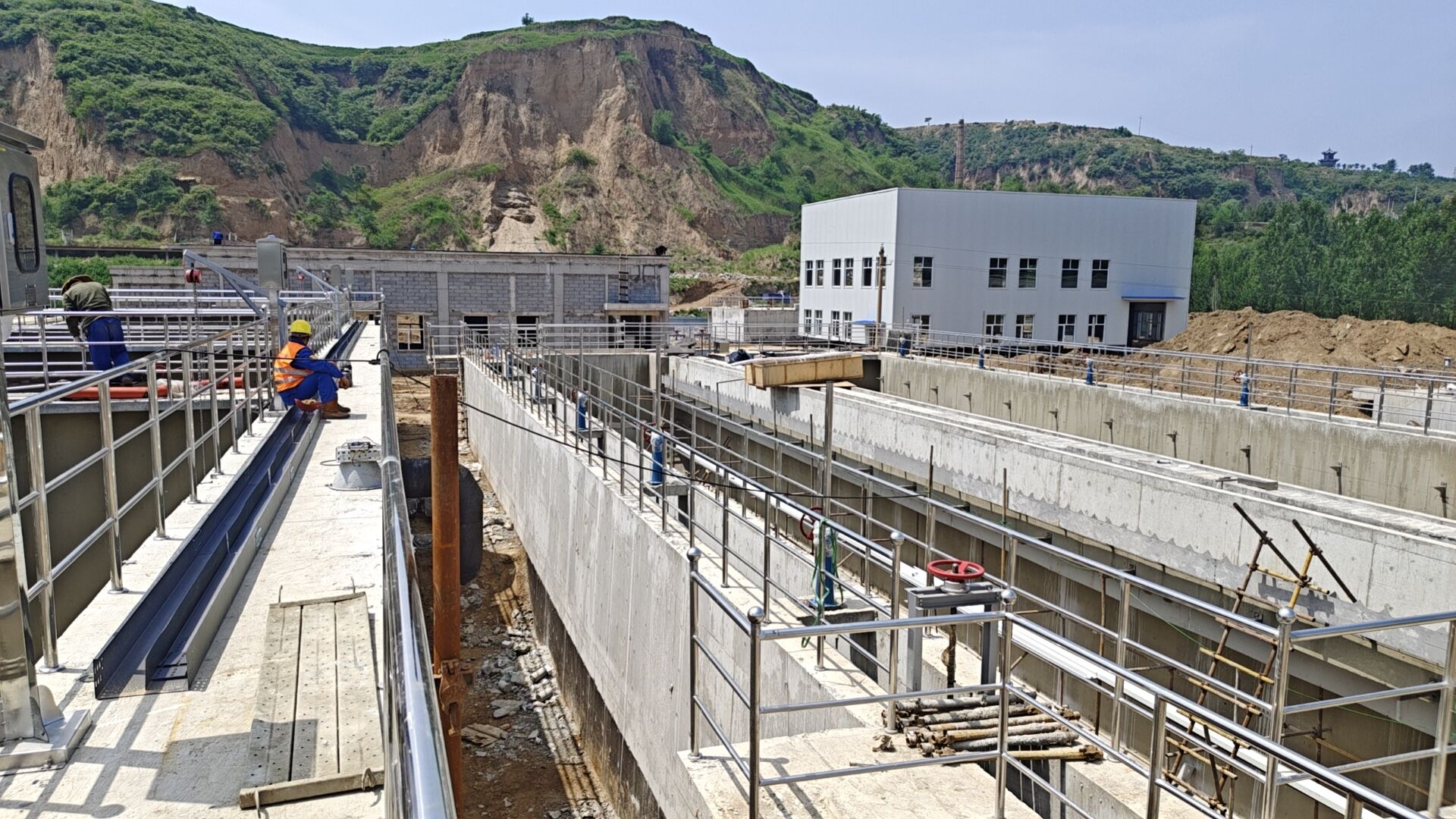
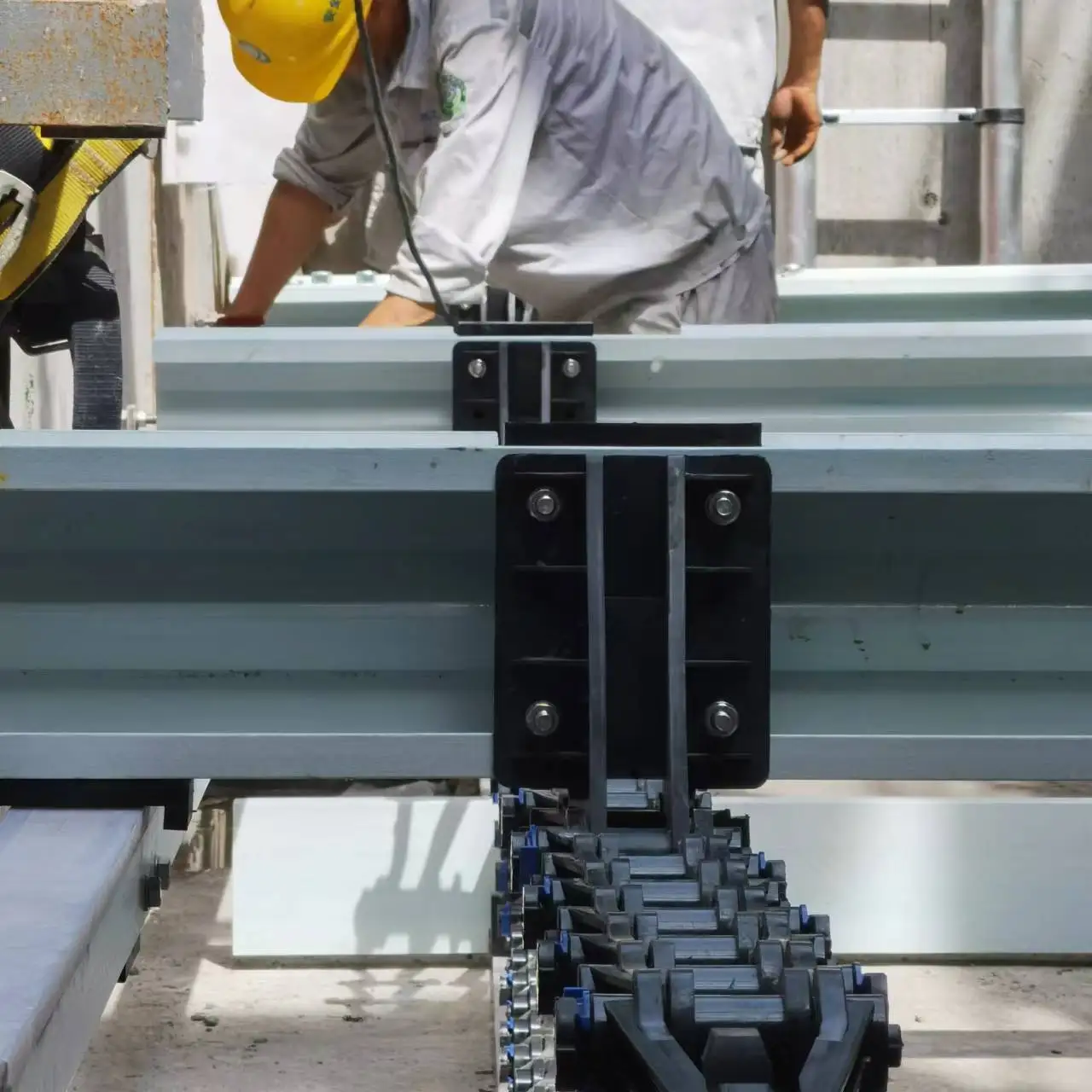
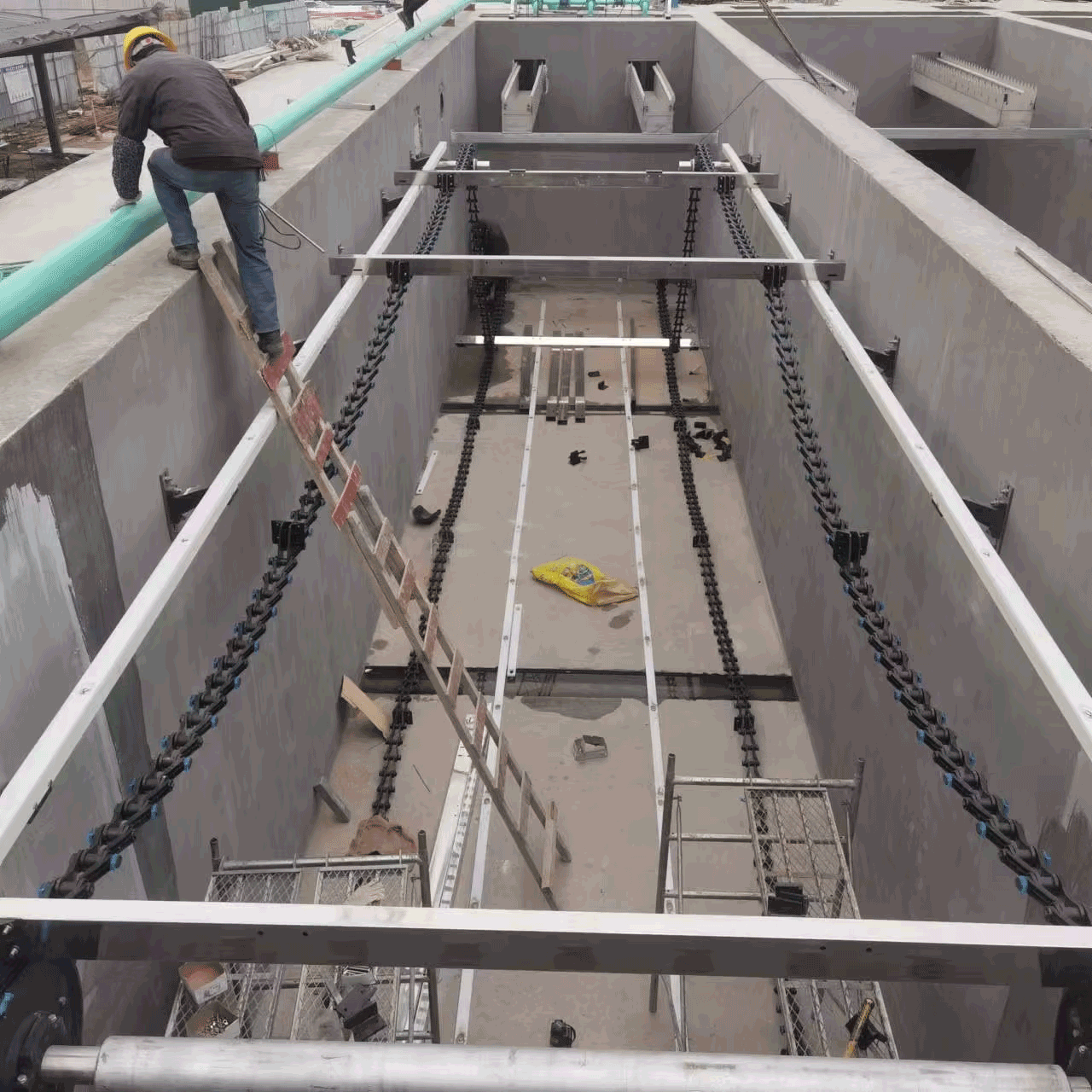
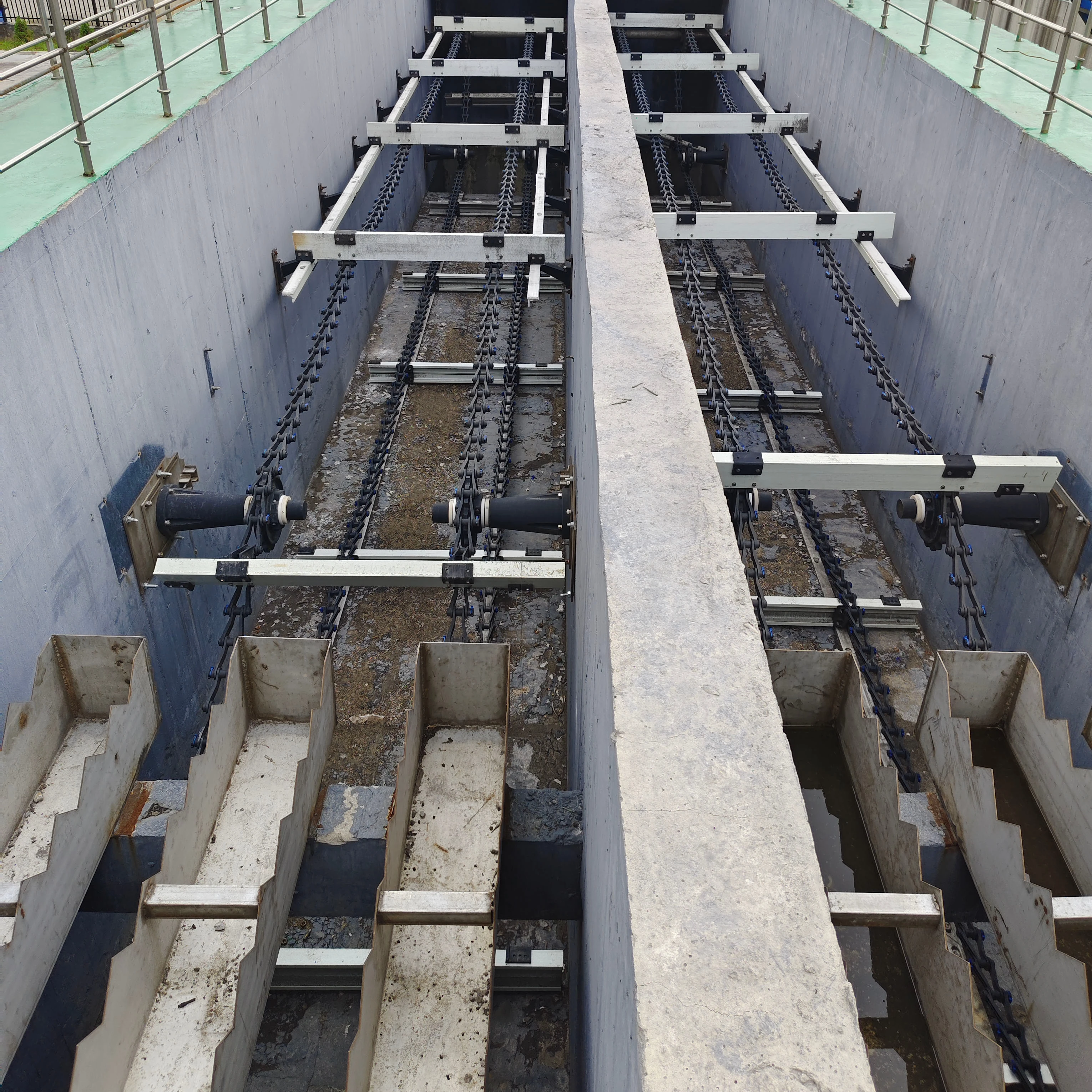
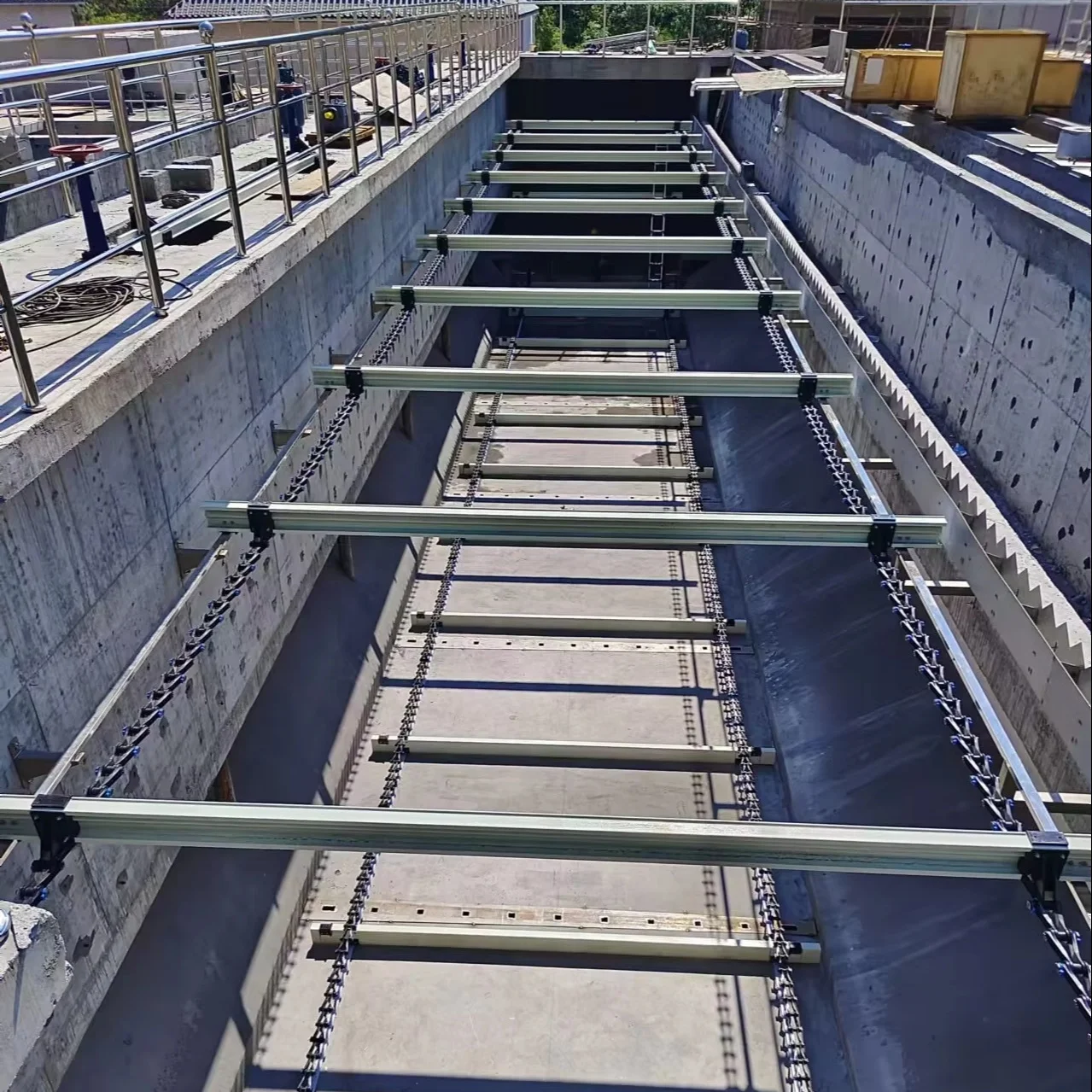
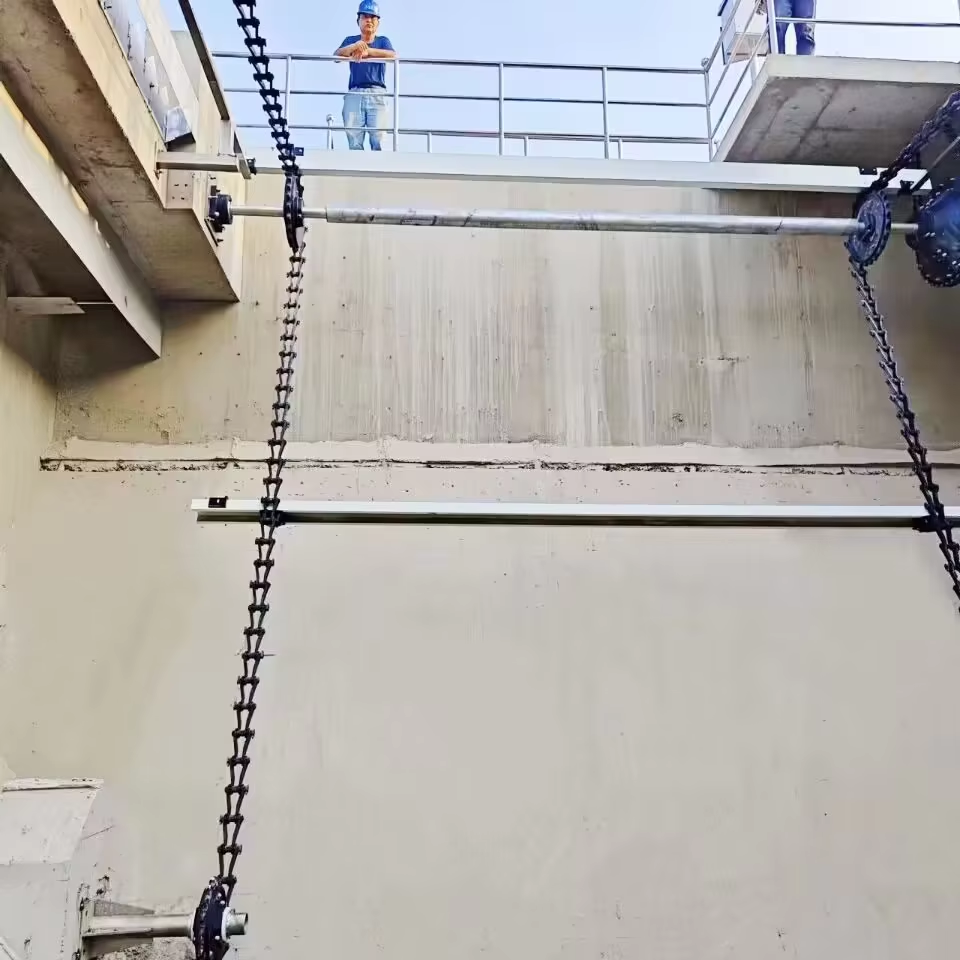
A scraper system is a fundamental mechanical assembly used in water and wastewater treatment for the continuous removal of settled solid matter (sludge) from the bottom of sedimentation tanks or clarifiers. It is an essential component for maintaining the continuous flow and treatment efficiency of a plant. The system typically consists of a drive unit, a conveyance mechanism (such as chains, a rotating bridge, or cables), and scraper blades or flights that move the collected sludge towards a hopper for withdrawal. Scraper systems are designed in two main configurations: for rectangular tanks (often chain and flight systems) and for circular tanks (typically center-column supported or peripheral driven revolving bridges). The selection of materials—ranging from carbon steel and stainless steel to advanced non-metallic composites—is critical and depends on the corrosion and abrasion characteristics of the sludge. A well-designed and reliable scraper system ensures optimal solid-liquid separation, protects downstream processes from hydraulic and organic overload, and reduces the need for manual tank cleaning, thereby enhancing operational safety and efficiency. It is a vital capital asset for any treatment facility.